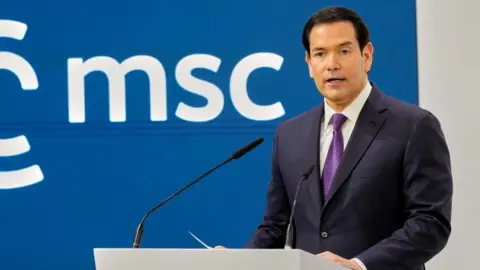
US Secretary of State Marco Rubio will meet Danish officials next week to discuss the fate of Greenland - a semi-autonomous territory of Denmark that President Donald Trump says he needs for national security.
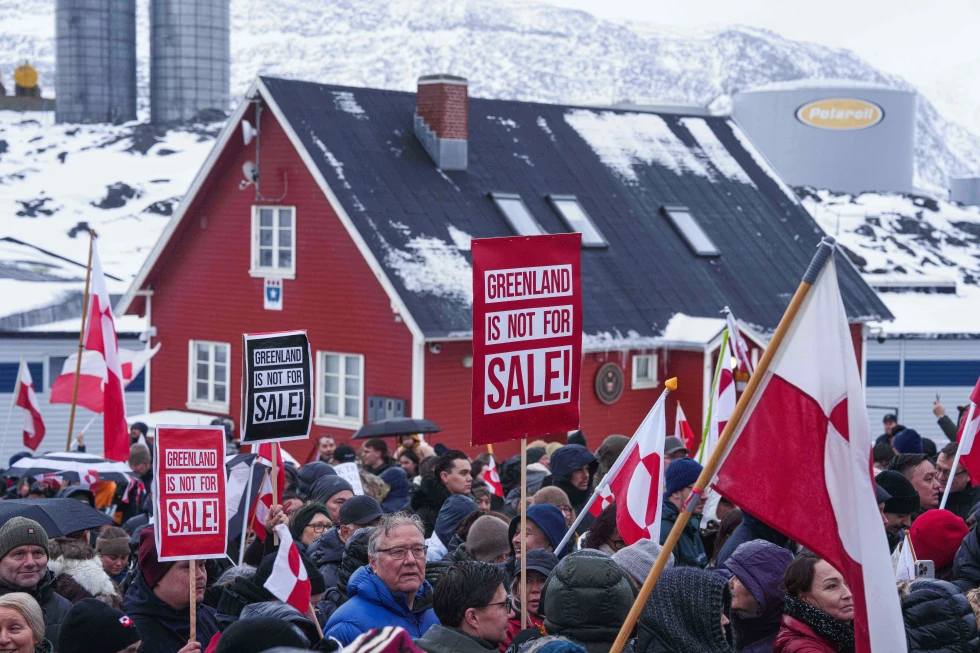
The vast island finds itself in the eye of a geopolitical storm with Trump's name on it and people here are clearly unnerved.
Yet when you fly in, it looks so peaceful. Ice and snow-capped mountains stretch as far as the eye can see, interrupted here and there by glittering fjords - all between the Arctic and the Atlantic Oceans.
It is said to sit on top of the world; much of it above the Arctic Circle.
Greenland is nine times the size of the UK but it only has 57,000 inhabitants, most of them indigenous Inuit.
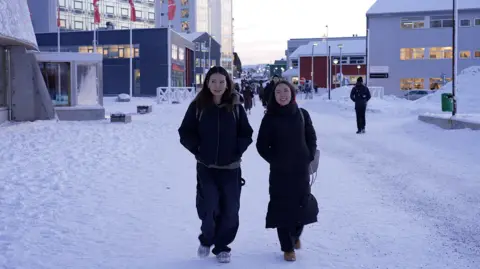
You find the biggest cluster of Greenlanders on the south-western coast in the capital, Nuuk. We arrived there as a frozen twilight was creeping across snow-covered pedestrian streets.
Few wanted to talk to us about the Trump-related angst here. Those who did sounded very gloomy.
Overall, Greenlanders want a bigger, louder say, not only in their domestic policies, but in foreign affairs too.
Pipaluk Lynge-Rasmussen, co-chair of the foreign affairs committee in parliament, emphasized that Greenlanders must speak out about their wants and work towards independence.
A lady who said she was mistrustful of everyone these days admitted she was 'scared to death' about the prospect of Trump taking the island by force after she watched his military intervention in Venezuela.
Greenlanders are acutely aware of their geography and the implications of US military presence in their territory, discussing their hopes for negotiations that will respect their autonomy while addressing external security interests.