In brief
Farmers, like Wayne Greier in Canfield, Ohio, are grappling with financial challenges and see solar projects as a path to stability. Despite their advantages, community opposition often quashes these opportunities. As farmers share their experiences and advocate for more acceptance of solar developments, the struggle continues, highlighting a broader tension between local laws and property rights.
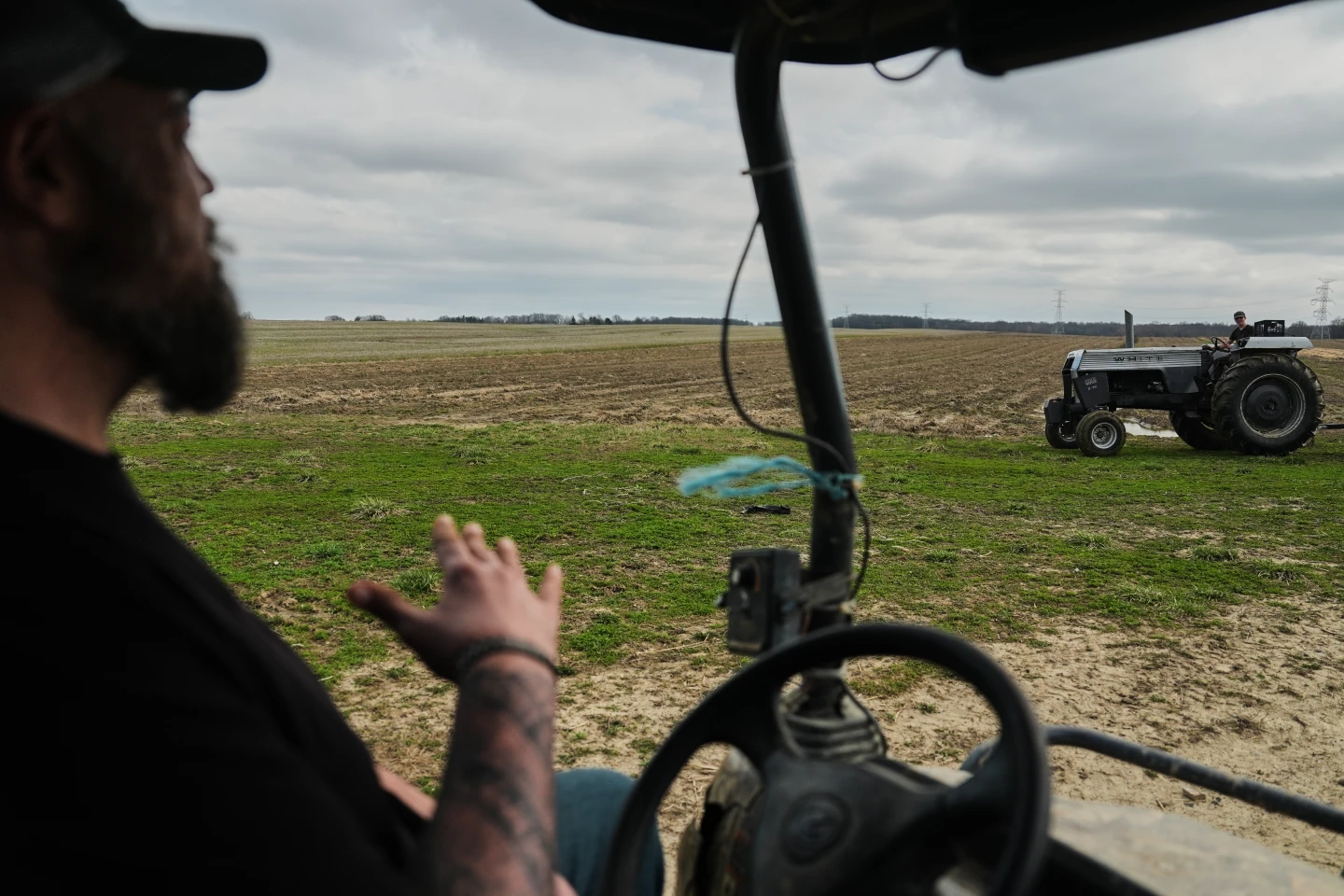
Through the window of his combine, Wayne Greier watches his son Blake drive a tractor across an empty field, towing a plow into position for another uncertain season of spring planting.
Greier’s concerns have multiplied as local officials blocked a potential solar farm on his land, a decision that forced him to sell part of his property amidst a heavy $1 million in medical debt from a long battle with COVID-19. What would have brought in $540,000 in lease payments, now lost, was described by Greier as “our saving grace.”
Opposition to solar energy has historically hindered green energy initiatives, but some communities recognize the potential economic benefits, including tax revenues and stable income for farmers in a volatile industry.
“Many communities want to decarbonize and support renewable energy but struggle to balance local concerns with the need for development,” said Juniper Katz, an environmental policy professor.
Dearborn County, Indiana officials paused solar developments amidst resident concerns while Greier has taken a stand to advocate for solar projects in his area, emphasizing the necessity for property rights and showcasing the challenges many local farmers encounter in navigating local laws.
The current political landscape, particularly under Republican administration policies, has led to increased restrictions on solar projects, complicating the path for farmers reliant on agricultural income. However, further advocacy and community engagement are carving paths toward potential solar integration.
As more residents like Morgan Carroll rally for support to reverse local bans, the evolution of solar energy in local farming communities continues to spark debate over land use and community rights.