In brief
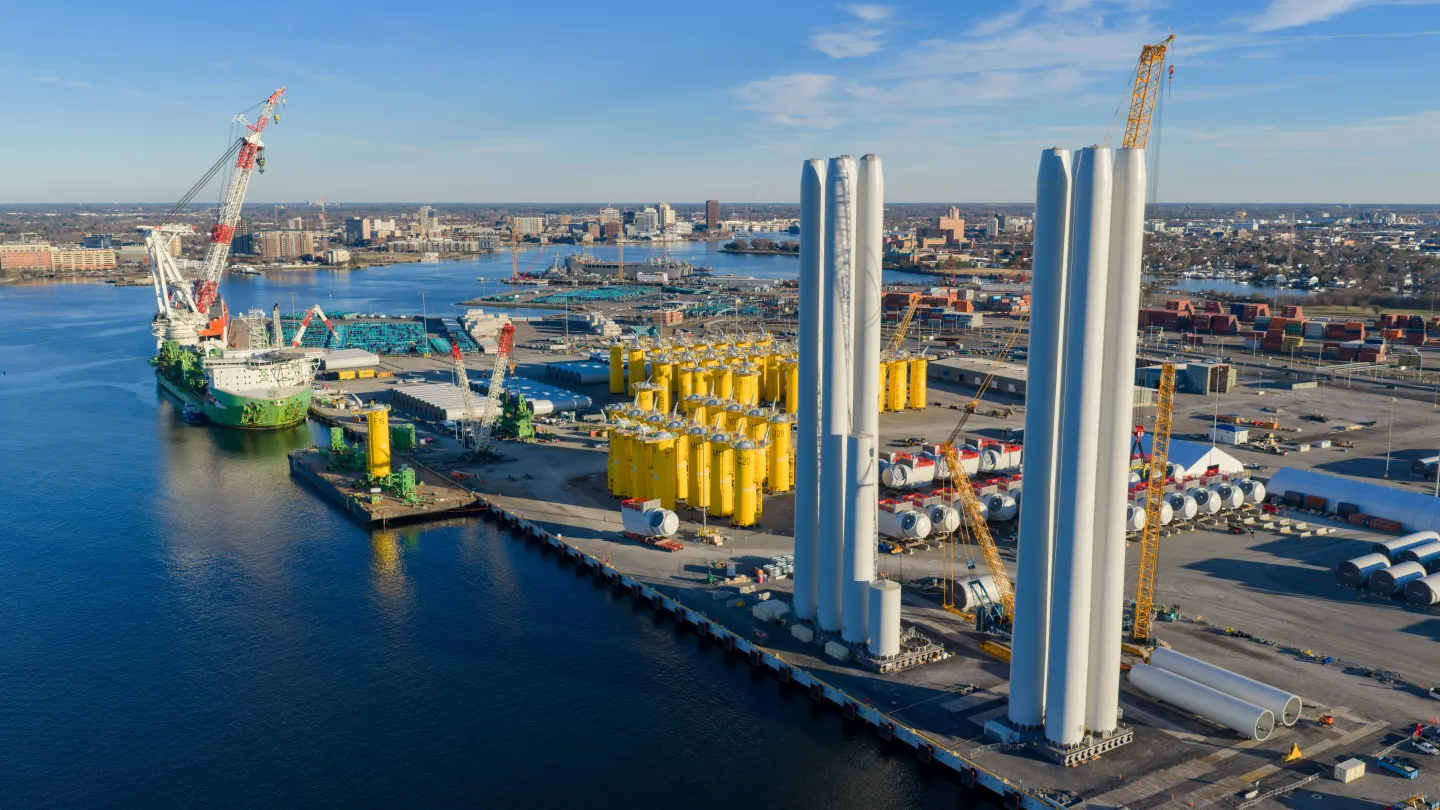
In a recent court hearing, District Judge Carl J. Nichols addressed the suspension of the Empire Wind project, designed to power over 500,000 homes, caused by a Trump administration order citing national security concerns. As the project is 60% complete, the Norwegian developer Equinor seeks a decision to move forward due to potential financial losses and the unavailability of specialized vessels. The case, amidst various legal challenges against the administration's order, emphasizes the growing conflict between energy development and national security assessments.
WASHINGTON (AP) — A federal judge is contemplating whether to revoke a Trump administration order that halted construction on the Empire Wind offshore project for New York, which the developer claims could endanger an initiative that is already 60% complete.
The Empire Wind project aims to supply power to more than 500,000 homes. The Norwegian company Equinor has highlighted that the project is at risk due to the limited availability of specialized vessels and substantial financial losses. This is one of five significant offshore wind projects on the East Coast that were frozen by the administration right before Christmas, citing national security concerns.
This matter was discussed in a court hearing presided over by District Judge Carl J. Nichols, a Trump appointee. Nichols concluded the hearing without a ruling, indicating he needed more time to deliberate but would issue a decision quite swiftly. The judge engaged extensively with the Empire Wind attorney regarding options to permit construction to proceed while he evaluated the detailed arguments concerning the case's merits.
Nichols questioned the government sharply about its failure to address crucial points in Empire Wind’s filings, including accusations that the administration did not adhere to proper procedures and acted arbitrarily. “Your brief doesn’t even include the word arbitrary,” Nichols pointed out to government representatives.
The administration's justification for the suspension involves secret national security reasoning that Nichols was asked to evaluate. However, specifics on these national security concerns have not been publicly disclosed. Experts argue that the offshore projects received permission after years of careful consideration, which included input from the Department of Defense.
This hearing for Equinor marks the second of three legal challenges under consideration this week. Earlier, a judge allowed a similar project in Rhode Island and Connecticut to resume activity, stressing the government must consider how to address any national security apprehensions.
Notably, Trump has long been opposed to offshore wind, deriding wind farms as economically unviable and unsightly, while expressing concerns over their impact on wildlife.
The administration's criticisms of offshore wind and renewable energy contradict the more progressive energy policies of many other countries. Nearly all new electricity brought onto the grid in 2024 came from renewable sources.
On the global stage, the British government recently reported securing 8.4 gigawatts of offshore wind energy in Europe’s largest offshore wind auction, capable of powering over 12 million homes and at significantly reduced costs compared to gas power plants.
Molly Morris, Equinor’s senior vice president overseeing Empire Wind, conveyed that federal officials have yet to provide any clarity regarding the national security concerns or strategies for their mitigation. With a necessary specialized vessel set to depart shortly for prior commitments, the urgency to resolve the situation intensifies for the company.
McDermott contributed to the reporting from Providence, Rhode Island.