In brief
In response to rising gas prices and energy supply uncertainties, European countries are increasingly exploring nuclear energy as part of their energy mix. With leaders advocating for its potential to augment energy independence, nations like Italy, Belgium, and Sweden are reconsidering their nuclear stances. While the long-term benefits of nuclear energy are debated, immediate financial and infrastructure challenges persist, prompting a deeper examination of energy strategies.
With a pit in their stomach, families and industries across Europe are watching gas prices and the cost of filling vehicles with petrol spiral.
While the UK government has told voters pretty much to keep calm and carry on, the European Commission - the EU's executive arm - has called on people to work more from home and to travel a lot less.
Policymakers warn things could get much worse - depending on what happens next in the Middle East. Yet it feels like only yesterday that Europeans faced a cost-of-living crisis on the back of spiralling energy costs and inflation following Russia's full-scale invasion of Ukraine.
This means conversations in Europe are turning (again) to the issue of energy independence.
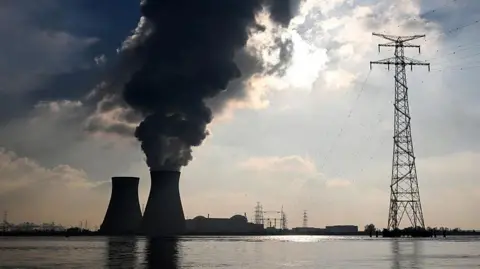
And nuclear energy seems to be back in fashion as part of a home-grown European energy mix - in the UK as well as the EU. But how quick a fix can nuclear be - and how safe and reliable is it really?
At the recent European Nuclear Energy Summit in Paris, European Commission chief Ursula von der Leyen described Europe broadly turning its back on nuclear as a strategic mistake. In 1990, Europe produced around a third of its electricity from nuclear power. That has now fallen to an average of 15%, leaving the continent completely dependent on expensive and volatile imports of fossil fuels, she said.
Europe imports more than 50% of its energy, leaving it vulnerable to unexpected supply reductions or price increases on the global market.
Gas prices rise at a similar rate across Europe but the impact on electricity prices varies depending on each country's energy mix. Spain has invested heavily in wind and solar power, contrasting with Italy’s gas-dependent pricing.
A renewed enthusiasm for nuclear power is palpable in Europe:
- Italy is preparing draft laws to repeal its longstanding ban.
- Belgium seems to be making a complete U-turn after years of reluctance about investing in nuclear energy.
- Greece has opened a public debate on advanced reactor designs.
- Sweden reversed a four-decade old decision to abandon nuclear technology.
- In the UK, Chancellor Rachel Reeves announced streamlining regulation to help advance nuclear projects.
As Europe's leaders rally around nuclear energy, they recognize it plays a crucial role in achieving energy sovereignty and contributing to net-zero goals. However, experts caution that nuclear energy is not an immediate solution to the current crisis; infrastructure and funding constraints may hinder rapid implementation.
The debate continues as Earth strives toward a secure energy future.