In brief
With energy prices skyrocketing, American families face an uphill battle as they struggle to manage their utility bills. Highlighting the experience of Kristy Hallowell, who endured six months without electricity due to unaffordable costs, the article delves into the broader issue affecting millions as the country prepares for a challenging winter. Reports indicate that nearly one in 20 households risk having their utility debts sent to collections, with many increasing their dependency on non-profits for support amid rising energy costs, shifts in policy, and the economic burden of inflation.
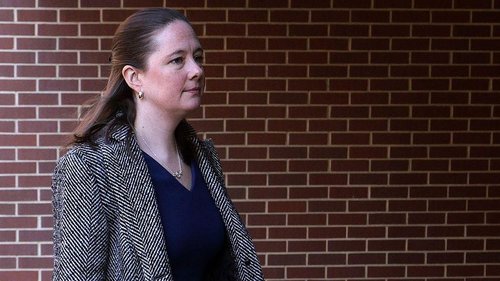
Kristy Hallowell had just lost her job when her energy bill unexpectedly tripled to $1,800 a month.
Unable to pay, her gas and electricity were cut off and she, her two children and her mother spent six months of last year relying on a generator to light and heat their house.
The 44-year-old is one of millions of Americans who have fallen behind on their energy bills as prices have soared over the past year.
The electricity is now back on at her home in Greenwood Lake, New York, after a local non-profit helped reach an agreement with the utility to accept a partial payment.
But the gas is still off and electricity bills keep mounting this winter, leaving her in fear of another shut-off. She said she now had about $3,000 in utility debt.
This has been traumatic, to say the least, she said.
Nearly one in 20 households are at risk of having their utility debt sent to collections heading into the winter months, according to a recent report.
The number of households with severely overdue utility debt rose by 3.8% in the first six months of Trump's second term, the analysis of consumer credit data, compiled by the Century Foundation and Protect Borrowers, found.
Residential energy bills have emerged as a key cost-of-living concern among American consumers, as many buckle under the weight of rising prices and sour on US President Donald Trump's handling of the economy.
Official economic data from November shows electricity prices rose 6.9% from the year before - much faster than overall inflation.
Trump, who during his campaign said he would cut energy bills in half, has claimed that costs are falling. Costs under the TRUMP ADMINISTRATION are tumbling down, helped greatly by gasoline and ENERGY, he posted on social media in November.
The White House blames former President Joe Biden and US central bank interest rates for the lingering economic pain.
But in the wake of Democratic wins in recent state and city elections and polls showing waning consumer confidence, the Trump administration has shifted its messaging to focus on affordability, in a bid to allay voter anxiety about the cost of living in the US.
At the same time, the federal government has proposed slashing the funds it gives to states to help low-income residents pay their utility bills.
Experts also warn that the Trump administration's rollback of clean energy projects - including its recent decision to pause leases for offshore wind energy projects being built near the Atlantic coastline - could drive electric bills even higher.
This is going to be a huge deal, both as a policy matter and a political matter, said Alex Jacquez, chief of policy and advocacy at the Groundwork Collaborative, a progressive economic think tank.
Laurie Wheelock, executive director of the Public Utility Law Project of New York, said many of her clients - low-income utility customers in New York state seeking help with their bills - have let utilities fall to the side as rent, health insurance, and other costs keep getting more expensive.
In 2025, the non-profit saw an increase in utility account terminations for unpaid bills.
Before the pandemic, clients who approached the organization typically owed $400 to $900 in utility debt. Now, people often owe upwards of $6,000, she said.
There's been this difficult mix of increased costs and financial instability, she added.
Winter heating costs are expected to jump 9.2% this season, according to the National Energy Assistance Directors Association, driven by rising electricity and natural gas prices and unusually cold weather.
Energy bills tend to be among the highest in the northeast US.
There are several reasons for rising residential energy costs, analysts say. The price of natural gas, which is a crucial component of nearly half of electricity generation in the US, has jumped over the past year. The natural gas industry is pushing more and more production overseas, contributing to higher domestic prices.
Electricity generation is being saddled with ever-increasing costs of fuel, said John Quigley, a senior fellow at the Kleinman Center for Energy Policy at the University of Pennsylvania.
Last year, Ibrahim Awadallah, 30, installed solar panels on his home in Charlotte, North Carolina, in the hopes of reducing his energy costs. Still, he noticed a roughly 10% increase on his bill despite being out of town for much of the month.
Awadallah is concerned that a proposed data centre project nearby may drive up electric costs even more.
I don't think things are getting better anytime soon, he lamented.