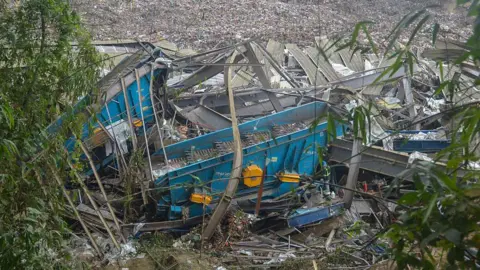
Aftershock Fury: Philippines Grapples with Growing Death Toll After 7.8‑Magnitude Earthquake
A 7.8‑magnitude tremor that hit the Philippine island of Mindanao early Monday night has left at least 37 people dead and 487 injured, officials say, as a dramatic wave of aftershocks continues to shake communities across the southern region.
The disaster unfolded on a coastline that has long been vulnerable to earthquakes, sitting on the Pacific Ring of Fire. Initial reports show that dozens of buildings have collapsed, roads are cracked or buried in landslides, and large swaths of the island have lost electricity and telephone connectivity.
A tsunami warning was issued for parts of Indonesia, the region south of Mindanao, and even Japan’s Pacific coast, displacing tens of thousands of people across the region.
“We hope the death toll does not increase further, but we are expecting it to move,” said Bernardo Alejandro, assistant secretary of the disaster response agency, on DZMM radio. “Our priority today is search and rescue.”
Survivors say that while the shaking felt like being “vigorously rocked on a hammock for more than two minutes,” schools remained relatively safe because classes were held outside during the morning assembly.
The crustal activity that caused this quake was the movement along the Cotabato Trench. The same trench produced a magnitude‑7.9 earthquake in 1976 that triggered a deadly tsunami, killing about 5,000 people.
The quake is one of the strongest on Mindanao in recent decades. Officials estimated that close to 2,000 homes and 6,000 public schools have been damaged in the affected areas.
President Ferdinand Marcos Jr. said he had mobilised the entire government machinery to respond to the calamity, dispatching his transportation and health secretaries to Mindanao to oversee relief operations.
Accessibility to some inland towns, such as Jose Abad Santos in Davao Occidental on Mindanao’s east side, remains difficult due to landslides that buried major highways. The mayor of the town said relief goods had to be flown in to reach far‑flung villages.
Social media shows a branch of the Jollibee fast‑food chain in General Santos City collapsing during the quake; the company has confirmed the safety of its staff in the affected area.
According to health secretary Teodoro Herbosa, some strong aftershocks hit as doctors continued to treat the injured, complicating rescue efforts. In the aftermath, the national emergency management authority has declared a state of emergency to keep the response coordinated across affected provinces.