Donald Trump's recent proposal concerning the future governance of Gaza has stirred controversy, drawing sharp rebukes from Palestinian leaders, Arab states, and Western allies. Trump's assertion that the United States could "take over" Gaza and rebuild it hinges on cooperation from countries like Jordan, Egypt, and Saudi Arabia—all of which have explicitly rejected his ideas. This leads to the likelihood that the proposal will face considerable obstacles before it could ever be realized.
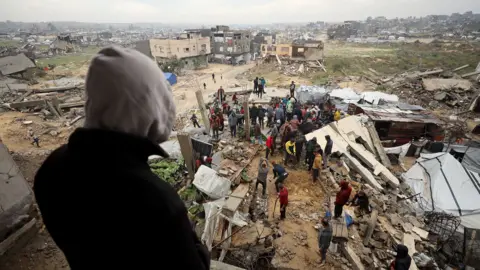
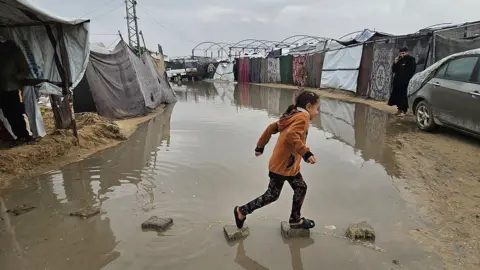
Despite the improbability of Trump's plan coming to fruition, it has already struck a chord among disparate factions. Many Palestinians in Gaza are anxious about the implications of a potential exodus, while approximately 1.5 million others who remain would likely face severe repercussions if forced out by military action. Such a course of action would resonate strongly in the U.S., especially recalling the long-term ramifications of American intervention in Iraq in 2003.
The plan stands in stark contrast to the decades-long hope for a two-state solution, a vision that has lost traction under Prime Minister Netanyahu's administration. Historically promoted by the U.S. as the linchpin of foreign policy, this aspiration now appears increasingly unattainable due to the prevailing nationalist agenda within Israeli politics.
Additionally, Trump's proposal raises serious ethical and legal questions, as its implementation would breach international norms. The fragility of international agreements could result in escalating tensions, further undermining any belief in a rules-based global order. Trump's comments, while seemingly outlandish, serve as reminders of his influence as a former U.S. president, creating ripples even among entities that typically ignore circus-like political spectacles.
In the immediate aftermath of Trump's comments, analysts suggest a potential resurgence in hostilities, with some voices predicting the end of the fragile ceasefire in Gaza. The lack of a credible future governance model is already straining the existing agreement. Furthermore, Trump's remarks may invigorate ultra-nationalist factions in Israel, fueling their ambitions for land reclamation—a worrying prospect for any hopes of lasting peace.
Palestinian groups, specifically Hamas, may feel compelled to respond to Trump's incendiary rhetoric, given the historical context of dispossession and their collective trauma stemming from historical expulsion events known as al-Nakba. The fear that they might again face further dispossession replaying past traumas is a prevalent concern for many.
Some speculate that Trump's motivations may revolve around elevated geopolitical maneuvering or even his aspirations for a Nobel Peace Prize—attempts often shrouded in real-estate negotiation ethics rather than sound policy principles. Amid his Gaza proposal, Trump expressed a desire for a "verified nuclear peace agreement" with Iran, potentially seeking to quell Israeli hardliners by projecting a façade of engagement with Iran.
Overall, Trump's Gaza plan not only reflects a disregard for international standards but could also undermine any semblance of stability within an already volatile region, raising eyebrows and inciting dread among the populations directly affected.