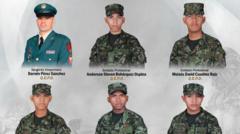
On April 15th, the killing spree began in earnest as armed groups, notably the Gulf Clan, retaliated for the recent elimination of their leaders. President Gustavo Petro condemned these attacks as unjust acts of vengeance. The toll includes 15 police officers and 12 soldiers from various locations across the country, with a grievous ambush in Guaviare province claiming the lives of seven soldiers.
The Colombian government has since announced a reward for information that aids in apprehending those responsible for these targeted killings. President Petro, who campaigned on the promise of achieving "total peace," faced the uncomfortable reality of this strategy being undermined as stated by his interior minister. The breakdown of peace talks with the Gulf Clan and other factions has further complicated the situation.
In a detailed list shared on the social media platform X, Petro outlined the names of the 15 slain police officers and 12 soldiers, highlighting that a significant number were on duty when attacked. The army attributed the Guaviare ambush to a faction of the dissident Farc rebels, a group that emerged following the 2016 peace deal which saw the majority of Farc members disarm.
In previous attempts to quell the violence, Petro’s administration had engaged in negotiations with both dissident Farc groups and the National Liberation Army (ELN), which foundered earlier this year. The talks with the ELN were halted citing the group's lack of commitment to peace, while ceasefire agreements with dissident Farc factions were also left to lapse.
Tensions escalated in February when police efforts to apprehend the Gulf Clan leader known as "Chiquito Malo" resulted in his escape; however, the police did succeed in killing another top leader known as "Terror." The government now believes the Gulf Clan's orders for retribution against security forces directly stem from these intelligence-driven operations.
The Colombian government has since announced a reward for information that aids in apprehending those responsible for these targeted killings. President Petro, who campaigned on the promise of achieving "total peace," faced the uncomfortable reality of this strategy being undermined as stated by his interior minister. The breakdown of peace talks with the Gulf Clan and other factions has further complicated the situation.
In a detailed list shared on the social media platform X, Petro outlined the names of the 15 slain police officers and 12 soldiers, highlighting that a significant number were on duty when attacked. The army attributed the Guaviare ambush to a faction of the dissident Farc rebels, a group that emerged following the 2016 peace deal which saw the majority of Farc members disarm.
In previous attempts to quell the violence, Petro’s administration had engaged in negotiations with both dissident Farc groups and the National Liberation Army (ELN), which foundered earlier this year. The talks with the ELN were halted citing the group's lack of commitment to peace, while ceasefire agreements with dissident Farc factions were also left to lapse.
Tensions escalated in February when police efforts to apprehend the Gulf Clan leader known as "Chiquito Malo" resulted in his escape; however, the police did succeed in killing another top leader known as "Terror." The government now believes the Gulf Clan's orders for retribution against security forces directly stem from these intelligence-driven operations.