In brief
The US Supreme Court is set to review laws in Idaho and West Virginia that ban transgender athletes from competing in women's sports after successful challenges from two students. This decision could have far-reaching impacts across various states and aligns with recent controversies surrounding transgender rights.
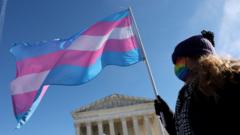
The US Supreme Court is preparing to assess the legality of state laws that restrict transgender athletes from participating in women's and girls' sports. This critical evaluation stems from cases in Idaho and West Virginia, where lower courts issued injunctions allowing two transgender students to compete. The potential ruling from the Supreme Court could dramatically influence regulations across the country.This legal scrutiny comes shortly after the Supreme Court's approval of a Tennessee law restricting gender transition care for minors, a decision that has raised concerns among advocates for transgender rights. The upcoming Supreme Court review will address the challenges presented by Becky Pepper-Jackson, 15, and Lindsay Hecox, 24, who successfully argued their respective cases against the bans, alleging these laws are discriminatory.Idaho was the first state to implement such legislation, with over two dozen states following suit. Hecox, a long-distance runner, initiated her legal challenge against Idaho's law just after its passage in 2020, earning support through favorable rulings from both district and appellate courts.Proponents of the ban, including Idaho state lawmaker Barbara Ehardt, claimed it was necessary to maintain fair competition in women's sports. However, appellate judges determined that the law infringed on constitutional rights and lacked compelling evidence supporting the claims of preserving sex equality and opportunity for female athletes.West Virginia Attorney General John McCuskey expressed support for the Supreme Court's review, arguing that allowing male athletes to compete against women undermines fairness in athletics. Conversely, Joshua Block from the American Civil Liberties Union (ACLU), who is representing Hecox and Pepper-Jackson, denounced the discriminatory nature of such regulations, stating that exclusion from sports would foster a harmful environment in schools.The Supreme Court's deliberation on this contentious issue, scheduled for its next term starting in October, may shape the future of transgender rights within athletic frameworks across the nation, especially as federal discussions continue surrounding policies affecting transgender individuals in sports.