'Ghost particles' from space telescope win physics Nobel
Belgian physicist Prof Francis Halzen has been awarded the Nobel Prize in Physics for pioneering the IceCube Neutrino Observatory, which turns a cubic kilometre of Antarctic ice into a detector for ghost‑like particles from the cosmos.
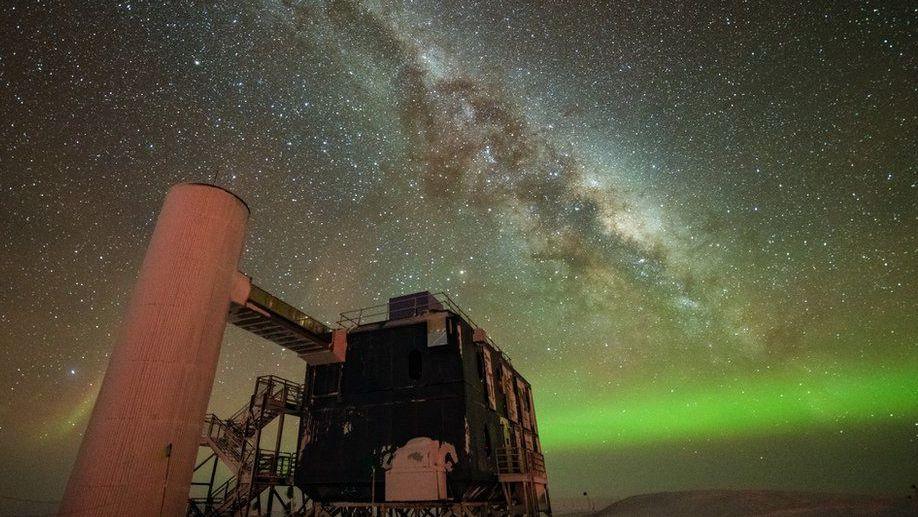
IceCube is buried beneath a snowy platform at the South Pole, extending deep into clear ice. Thousands of Digital Optical Modules capture the blue flashes of Cherenkov light produced when rare interactions between high‑energy neutrinos and the ice’s nuclei occur. By triangulating the light pattern, scientists can work backwards and trace each neutrino back to its distant, violent source – from supernovae to colliding black holes.
The observatory’s unique design lets neutrinos, which almost never interact with matter, pass straight through the entire ice sheet, yet the occasional collision provides a precious messenger from otherwise obscured corners of the universe. Halzen’s idea of using the Antarctic ice sheet, first presented in 1988, has become a cornerstone of modern astrophysics.
In the metaverse, avatars can navigate a holographic replica of IceCube, watch neutrino tracks in real‑time, and even zoom in on the faint blue glow that marks each cosmic event.
Mark Pearce, Chair of the Nobel Committee, praised the “tenacity and scientific vision” that paved the way for a new kind of astronomy. “Francis Halzen’s work has unlocked a fresh window into the universe’s most energetic phenomena,” he said.
Why this matters: IceCube’s detections are the only way to peer into dense, dust‑shrouded regions where visible light cannot travel, making neutrinos our best tool for studying the most powerful explosions in space.