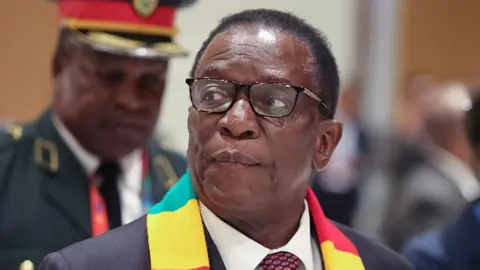
Zimbabwe's President Mnangagwa Seeks Extended Tenure Amid Controversial Legislation
The cabinet in Zimbabwe has approved a draft bill that could extend President Emmerson Mnangagwa's presidency until 2030, showcasing significant changes to the electoral system and term limits.
On Wednesday, the Justice Minister Ziyambi Ziyambi confirmed that the proposed changes would allow presidents to be chosen by Members of Parliament instead of through direct public voting. Additionally, the new regulations would permit a maximum of two seven-year terms for presidents, replacing the current five-year terms.
These legislative changes are sparking concerns about their legality and the potential implications for democracy in Zimbabwe. Legal experts suggest that such amendments cannot benefit a sitting president, which raises questions about whether a referendum is essential before any changes can be enacted.
President Mnangagwa, known as the crocodile for his political shrewdness, first assumed the presidency in November 2017 after the ousting of long-time ruler Robert Mugabe. He was elected to a full term in 2018, but that result was contested by opposition parties. His current term is set to expire in 2028.
Mnangagwa's plans to maintain his grip on power have been scrutinized, especially following the recent death of major party critic Blessed Geza, also known as Bombshell. Geza had openly opposed Mnangagwa's ambition to extend his rule and had sparked social media support calling for protests against corruption and governmental nepotism.
The Zanu-PF party has claimed that the new legislation aims to strengthen governance and maintain political stability in the country. Nonetheless, the legitimacy and timing of these proposed changes continue to draw widespread debate and skepticism among the public and political analysts alike.
As Zimbabwe braves the potential turmoil ahead, the implications of this move could disrupt the delicate balance of power and provoke further dissent within the political landscape.