In brief
Bulgaria becomes the 21st member of the eurozone on a path that has sparked optimism among the youth and urban population while instilling fear in conservative, rural communities. As the country navigates this currency change with the impending end of the lev, public opinion remains divided amidst political strife and economic uncertainty.
Bulgaria - the poorest country in the European Union - has become the 21st member of the eurozone, leapfrogging more obvious and prosperous candidates like Poland, the Czech Republic, and Hungary.
For mostly urban, young, and entrepreneurial Bulgarians, this transition represents an optimistic leap into European integration, including NATO and EU membership, Schengen zone participation, and now, the euro.
However, for older, rural, and more conservative Bulgarians, the replacement of the lev by the euro stirs concerns about economic stability and identity.
The lev has been the Bulgarian currency since 1881 but has been pegged to other currencies since 1997. Opinion polls reveal a roughly even split on euro acceptance among Bulgaria's 6.5 million citizens, compounded by a politically tumultuous environment.
Prime Minister Rosen Zhelyazkov's coalition faced a confidence vote after widespread protests, with seven elections in four years possibly leading to an eighth soon.
Some citizens like Todor, a small business owner, voice strong opposition to the euro, lamenting a lack of a referendum. Others, like Ognian, express hope for positive outcomes, readying their businesses for the transition.
As of January 2026, both lev and euros can be used until full transition to the euro by February 1. Common concerns involve price stabilization and consumer rights protection against potential price hikes, prompting authorities to establish watchdog groups.
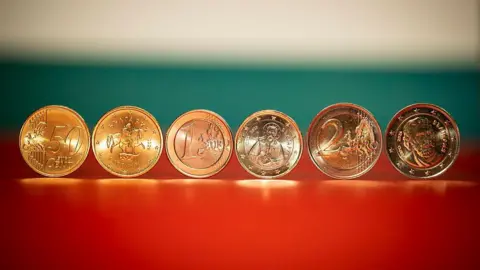
The design of new euro coins incorporates Bulgarian symbols to alleviate fears over lost sovereignty, featuring notable historical figures.
Bulgaria's future amidst this transition remains uncertain, weighed down by lessons from other euro-adopting nations.