In brief
Israel's parliament has voted to extend an order allowing for the closure of foreign broadcasting outlets, expanding temporary powers previously enacted during the Gaza conflict. The legislation enables the government to shut down these outlets for two years without a court mandate, raising significant concerns regarding press freedom and expression. Major criticism has been directed at the handling of Al Jazeera, which was accused by Israeli officials of bias, while the network condemned the decision as a violation of journalism rights.
Israel's parliament has extended an order allowing the government to shut down foreign broadcasters operating in the country.
The legislation, passed by 22 votes to 10, expands temporary powers introduced during the Gaza war to shutter outlets seen as a threat to national security.
It allows the government for the next two years to cease operations of a foreign outlet even in peace time and without the need for a court order.
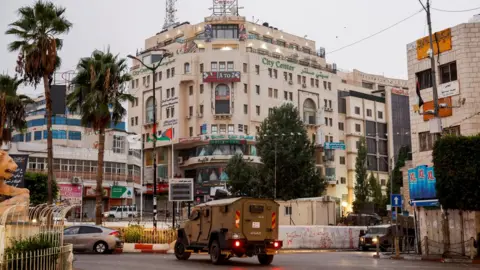
Originally dubbed the Al Jazeera Law, the powers were used to shut down the Qatari-owned channel's offices and block its broadcasts in May 2024.
Israel accused Al Jazeera - which has been a strong critic of Israel's military campaign in Gaza - of anti-Israel bias and of supporting Hamas in its coverage.
Al Jazeera denied the accusations and condemned Israel's actions, calling it a criminal act and an attack on press freedom.
The Association for Civil Rights in Israel (ACRI) said last year that the temporary order violated freedom of expression, the right to information and freedom of the press, and blocks citizens and residents from receiving a variety of information that does not fit the Israeli narrative or is not broadcast on Israeli media channels.
The legislation extending the order was passed hours after the Israeli cabinet approved a plan to shut down Army Radio, or Galei Tzahal (GLZ), a state-funded station that is operated by the Israel Defense Forces (IDF) but is editorially independent.
Under the plan proposed by Defence Minister Israel Katz, the station will cease operations by 1 March 2026.
Katz argued that Army Radio, which employs both active duty soldiers and civilians, no longer serves as a mouthpiece and ear for soldiers and broadcasts political and divisive content that is not in line with IDF values.
Prime Minister Benjamin Netanyahu told the cabinet meeting that a station broadcasting under the authority of the military was highly unusual.
I think it exists in North Korea and maybe a few other countries, and we probably don't want to be counted among them, he said.
The Union of Journalists and Journalists' Organisations said they would petition the High Court of Justice against the decision, calling it a severe and unlawful infringement on freedom of expression and freedom of the press.
The Israel Democracy Institute (IDI) think tank said shutting Army Radio constituted a serious violation of freedom of expression and effectively wiped out half of Israel's independent public radio news broadcasts.
The decision to shut down a public media organisation is not an isolated move. It is part of a broader and worrying pattern of ongoing harm to Israeli democracy, it warned.