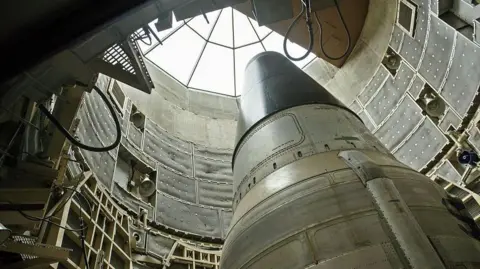
The last nuclear weapons control treaty between the US and Russia is due to expire on Thursday, raising fears of a new arms race.
The Strategic Arms Reduction Treaty, known as New START and signed in 2010, was designed to help prevent a catastrophic nuclear war.
The treaty capped the number of deployed strategic nuclear warheads for each party to 1,550 and established transparency including data transfer, notifications, and inspections.
Its expiry marks an end to the arms control cooperation that helped diffuse Cold War tensions.
On Wednesday, Pope Leo urged the US and Russia to renew the treaty, emphasizing the need to avert a new arms race in today's global climate.
Admiral Sir Tony Radakin of the UK has cautioned that the collapse of arms control frameworks is one of the gravest threats to global security.
With the treaty's expiration, experts are concerned about both the US and Russia modernizing their nuclear arsenals and developing advanced military capabilities, which could ignite competitive pressures to expand nuclear stockpiles further.
Russia's response to the treaty's expiration hints at a cautious but uncertain future, with officials suggesting readiness to act responsibly amidst ongoing tensions.
While the US remains less alarmed about the expiration, they express the intention to include China in any future arms control discussions.
The precarious situation underlines a greater urgency for diplomatic efforts to forge new agreements that stabilize global nuclear dynamics.