While some West African nations are choosing to cement old ties with France and others cultivate a new relationship with Russia, one country is trying to have the best of both worlds.
As the 7 December attempted military coup in Benin collapsed, the rebels' leader, Lt Col Pascal Tigri, made his discreet escape, apparently over the border into neighbouring Togo. From this temporary refuge, it seems he was then able to travel on to a more secure offer of asylum elsewhere - probably in the Burkina Faso capital Ouagadougou, or Niamey in Niger.
The opacity surrounding Togo's rumoured role in this affair is typical of a country that, under the leadership of Faure Gnassingbé, knows how to extract the maximum diplomatic leverage by defying convention and cultivating relations with a variety of often competing international partners.
The Lomé regime is far too shrewd to be caught out openly supporting a challenge to Benin's President Patrice Talon – with whom its relations are guarded at best – or officially confirming the Béninois belief that it secured coup-leader Tigri's passage to safety. Both governments are members of the beleaguered Economic Community of West African States (Ecowas).
Yet Gnassingbé makes no secret of cultivating affable and supportive relations with Burkina Faso and the fellow Sahelian military governments in Niger and Mali – all three of whom walked out of Ecowas last January.
Nor is he afraid of reminding France, Togo's traditional main international partner, that he has other options.
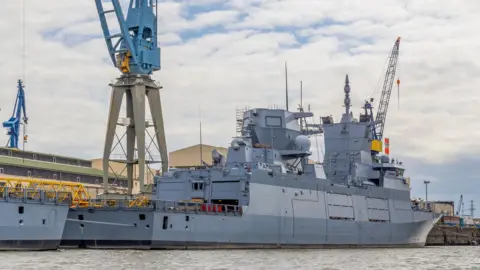
On 30 October President Emmanuel Macron welcomed Gnassingbé to the Élysée Palace for talks aimed at strengthening bilateral relations. But less than three weeks later, the Togolese leader was in Moscow for a notably warm encounter with Russian President Vladimir Putin. They formally approved a defence partnership allowing Russian vessels to use Lomé port, one of the best-equipped deepwater harbours on the western coast of Africa and a key supply gateway for the landlocked Sahelian states that, following the military coups of 2020 to 2023, have become key Kremlin protégés.
While Gnassingbé's trip to Paris was fairly low-key, his Moscow excursion was high-profile and wide-ranging. The bilateral military accord provides for intelligence and joint military exercises (although Lomé has no plans to provide a base for the Africa Corps, the Kremlin-controlled successor to the now disbanded Wagner mercenary outfit). All this was supplemented with plans for economic cooperation and an announcement of the reopening of their respective embassies, both closed back in the 1990s.
...
Togo needs to remain at the heart of the Ecowas regional grouping and, in fact, sits astride the key Lagos-Abidjan transport corridor, a major development priority for the bloc. But Gnassingbé has concluded that he also needs to maintain strong relations with the breakaway military-run regimes, now grouped in their own Alliance of Sahelian States (AES) – which Togo's Foreign Minister, Prof Robert Dussey has even speculated about joining.
Inevitably all this has unsettled France, for whom Togo was once regarded as among the most devoted of allies. The Togolese insist that their move to strengthen ties with Russia is not a conscious move to break ties with the West. Instead, Lomé presents the move as a natural diversification of relationships.
In a state of the nation address earlier this month, he said he would instruct the justice minister to look at possible prisoner releases. This hint of retreat from the earlier crackdown shows that even Gnassingbé's nimble international networking cannot defuse the underlying political discontent at home.