The Strategic Stakes: U.S. Military Interest in Iran's Kharg Island
As tensions escalate between the United States and Iran, President Donald Trump has hinted at the possibility of sending troops to seize control of Kharg Island, a critical oil export terminal for Iran. This move raises several questions about military strategies, potential risks, and the geopolitical implications of such an operation.
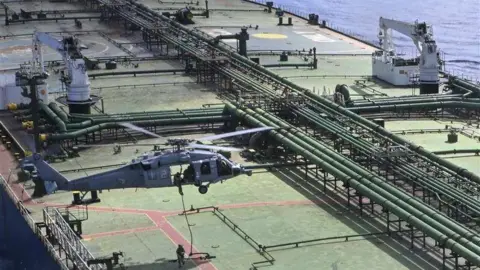
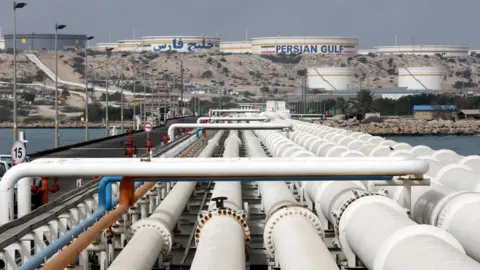
Kharg Island serves as Iran's primary outlet for oil exports, with approximately 90% of the country’s oil shipments passing through its waters. The island's strategic position allows for the loading of Very Large Crude Carriers (VLCCs), essential for transporting oil across global markets. Historically, it has faced significant military challenges, evidenced by frequent bombings during the Iran-Iraq war and recent U.S. strikes targeting military assets while sparing the oil infrastructure.
If a U.S. invasion were to occur, it would likely be a temporary tactic aimed at crippling Iran's oil exports and pressuring the Iranian government to cease its assertive maneuvering in the Strait of Hormuz, a vital artery for the world’s oil supply. However, the resilience of the Iranian regime raises doubts about the effectiveness of such a strategy.
Iran's parliamentary speaker, Mohammad Bagher Ghalibaf, has issued stark warnings about a fierce military response to any invasion, noting enhanced defense systems have been established on the island. The Iranian military is believed to include surface-to-air missile batteries capable of challenging any U.S. operation aimed at Kharg.
The U.S. forces mobilizing in the region are not just a show of strength; they include approximately 5,000 Marines and 2,000 paratroopers. These troops could execute an airborne assault during nighttime, targeting crucial positions on the small island (approximately 20 km²) to seize control. For this, U.S. Marines would likely deploy from ships equipped with specialized aircraft for amphibious landings—yet the journey through the Iranian-controlled Strait of Hormuz poses substantial risks due to the presence of hidden Iranian defenses.
Military experts suggest that a landing would be met with robust resistance, including anti-personnel mines and swarms of drones, creating a highly dangerous operational environment where the U.S. forces may prevail but at considerable potential cost in casualties.
Beyond seizing control, a greater challenge would be maintaining that position amid sustained bombardment likely coming from Iranian bases on the mainland. The scenario draws parallels with Ukraine's Snake Island, where initial control was challenged by relentless attacks, leading to a protracted struggle for control.
Domestically, prolonged military engagement is likely to face opposition within the United States, with some of Trump's supporters advocating for a non-interventionist approach. Meanwhile, Iran perceives the discussion around potential ground assaults as duplicitous, given ongoing U.S. proposals for peace talks.
As the situation remains fluid, speculation grows regarding the U.S.'s strategic intentions, including possible operations on alternative Gulf islands which currently serve Iranian military interests. Ultimately, this evolving context underscores the intricate balance between strategic military operations and broader geopolitical relations as both nations navigate a precarious standoff.