In brief
The US is now importing Venezuelan oil, with Chevron leading the charge. The Minerva Gloria tanker recently docked with 400,000 barrels, reviving Venezuela's once-vibrant oil export sector. However, despite this revival, Americans still face high fuel prices, raising questions about the impact of geopolitical events on oil markets. Industry experts believe that once global conditions stabilize, these imports could eventually lead to lower gasoline prices for US consumers.
The Minerva Gloria is docked at a wharf in the Mississippi Sound, not far from the US's vast oil reserves in the Gulf of Mexico.
The ship, 820ft (250m) long, painted navy and burgundy, is carrying precious cargo from Venezuela that, just six months ago, would have been impossible to bring to the US - 400,000 barrels of crude oil.
Venezuela has the world's largest oil reserves. Under Venezuela's former president Nicholas Maduro oil exports had dropped significantly due to a lack of investment. Then came US sanctions against any imports from the Latin American country.
But US President Donald Trump vowed to tap those reserves after the US military captured Maduro in a surprise, night-time raid in January.
Now the oil is flowing again in Venezuela. In March, the country's monthly crude exports surpassed one million barrels per day for the first time since September.
As the world reels from the impact on global energy prices caused by Iran blocking the Strait of Hormuz, big oil and gas companies like Chevron are now importing Venezuelan crude oil by the shipload.
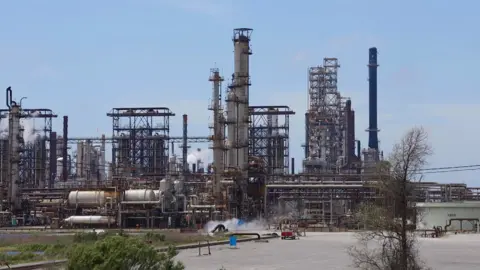
According to Tim Potter, director of Chevron's oil refinery in Pascagoula, Mississippi, where the oil is processed, It's a big deal not only for Chevron but the entire Gulf region.
Chevron now imports on average the equivalent of 250,000 barrels of Venezuelan crude oil per day. They believe this could escalate to 350,000 to 400,000 barrels daily.
Despite record imports, local prices at the pumps remain high, leading some consumers to express frustration over oil pricing in relation to domestic supply. While experts foresee potential price drops as Venezuelan oil integration stabilizes, current geopolitical tensions complicate immediate expectations.