In brief
The Two Mississippi Museums are central to the state's commemoration of America's 250th anniversary, featuring stark reminders of racial violence through panels listing over 600 lynching victims. Their exhibition is a bold move to confront the state’s history, reflecting both achievements and challenges faced by its citizens. Amid contrasting narratives from the federal level under former President Trump's administration, the museums aim to preserve truth over sanitized history, offering a poignant reflection for visitors.
In Jackson, Mississippi, the glass panels of the Lynching Victims Monolith etched with over 600 names remind visitors of the grim legacy of racial killings in the state. The story of Malcolm Wright, beaten to death in front of his family in 1949 for hogging the road, exemplifies the harsh realities captured at the Two Mississippi Museums, part of the America 250 celebration.
As visitors like Kiama Johnson reflect on the names listed, they are acutely aware of the untold stories of victims whose narratives remain outside mainstream history.
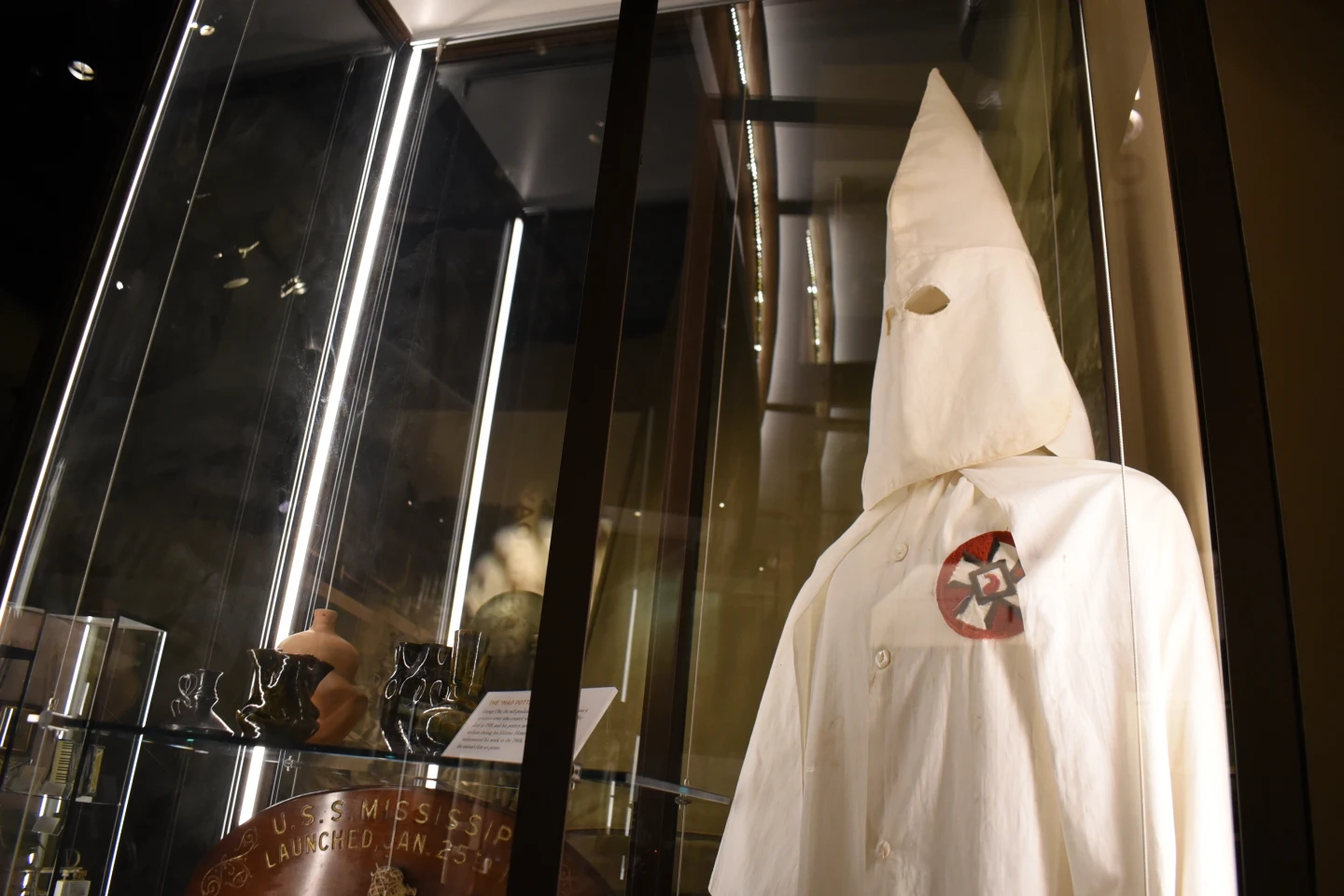
The Mississippi Civil Rights Museum, coupled with the Museum of Mississippi History, celebrates the state’s enduring legacy while embracing the challenge of reflecting its past honestly. Visitors encounter displays and artifacts that starkly contrast with the more sanitized narratives promoted by governmental authorities, particularly under the leadership of former President Trump.
Local leaders have embraced this historical exhibition, aiming to ensure that the truth is not whitewashed or omitted. Director Nan Prince emphasizes the necessity of honesty in recounting the darker chapters of Mississippi’s history, including its treatment of Native Americans and the brutal legacy of slavery.
The galleries present sobering audio exhibits and detailed accounts of the Civil Rights Movement, including reflections on pivotal figures such as Emmett Till. The queen of Mississippi quilting, Hystercine Rankin, is also featured, showcasing how personal tragedies intertwine with collective history.
Mayor John Horhn echoed the sentiment of being candid about the state’s past, noting that progress is possible when the truth is fully acknowledged. The Two Mississippi Museums stand as testaments to that journey, reminding everyone of the importance of understanding every facet of history—both the good and the painful.