Investigating the Justification of the Minneapolis ICE Shooting
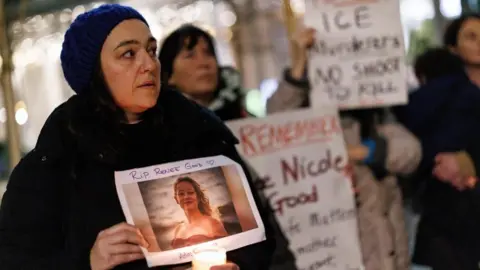
The recent shooting of a woman by an ICE agent in Minneapolis has ignited debates surrounding the justification of the use of deadly force. U.S. investigators must navigate conflicting accounts and video evidence to ascertain the nature of the incident that has provoked nationwide protests.
Renee Good, 37, was fatally shot by ICE agent Jonathan Ross while behind the wheel of her car. Accounts differ dramatically: the Trump administration has referred to her as a 'domestic terrorist' aiming to run over the agent, while local officials depict her actions as an attempt to leave the scene.
Emerging video footage shows ICE agents approaching Good's vehicle before Ross, who was filming, fired shots as her car moved forward. The interpretation of these actions varies between federal officials claiming Ross was justified, as he perceived Good as a threat, and local authorities arguing that she was turning away and posed no danger.
Experts emphasize the need for a thorough review that incorporates all evidence. Political statements made shortly after the incident raise concerns about potential biases in the investigation.
Former law enforcement agents warn that while Ross's initial response could be considered justified based on past injuries sustained in the line of duty, subsequent shots fired after Good's vehicle began to retreat remain contentious. The review will involve extensive analysis of video footage, witness accounts, and the physical scene to achieve a holistic understanding.
With state officials excluded from the federal investigation, there are fears about objectivity. Governor Tim Walz has called for an independent review amidst ongoing legal disputes over ICE's presence in Minnesota.