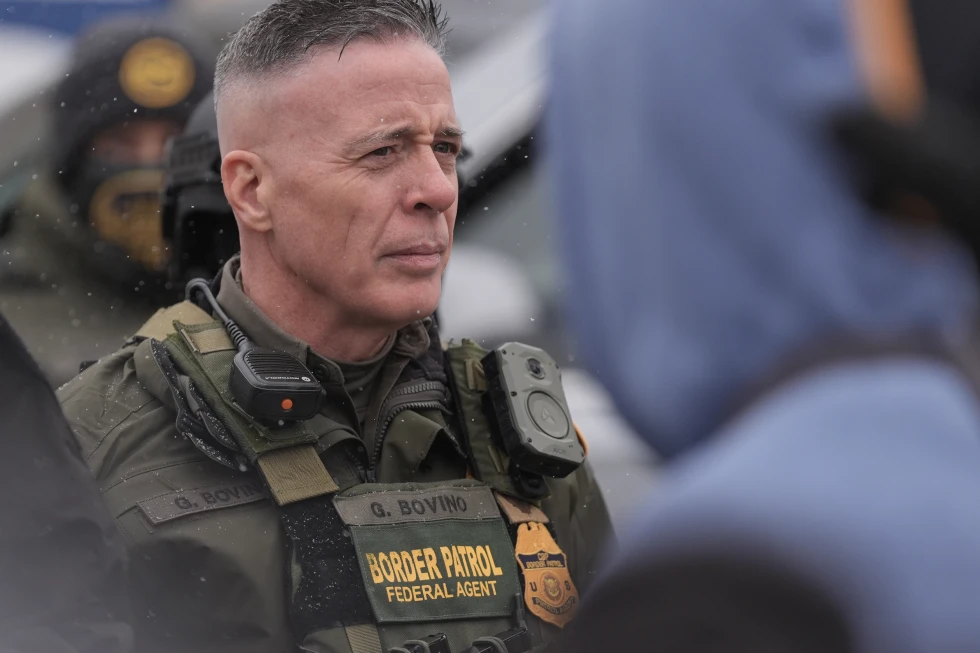
The commander of President Donald Trump’s immigration crackdown in Minneapolis has departed the city following federal agents fatally shooting two people in a brief period.
Gregory Bovino was the architect behind large-scale immigration crackdowns directed by Trump and served as the public face of city-by-city enforcement sweeps. Having led agents in cities like Los Angeles and Chicago, he arrived in Minnesota in December for what was described as the Department of Homeland Security's most extensive immigration operation.
Bovino is noted for his unorthodox tactics, which have attracted significant criticism.
Smashing Car Windows
Bovino is known for breaking norms. His agents have smashed car windows, forcefully entered homes, and even patrolled Los Angeles' MacArthur Park on horseback.
He justifies smashing windows when drivers refuse to comply, stating it’s “safer” than allowing them to flee.
In a high-profile incident in Huntington Park, California, he helped blast down a door to search for a suspect, claiming it was a “prudent” tactic.
Agents Rappel from Helicopter in Chicago
In Chicago, agents executed a dramatic raid on an apartment complex using a helicopter, allegedly targeting the Venezuelan gang Tren de Aragua. However, only two out of the 37 immigrants arrested were confirmed gang members.
Activists have voiced concerns that such aggressive tactics exacerbate community tensions. Bovino faced criticism from a federal judge for misleading information regarding protests and unjustified use of force.
Vowing a 'Turn and Burn' Approach
Typically, U.S. Immigration and Customs Enforcement (ICE) conducts arrests after extensive investigations, but Bovino's approach favored rapid, high-pressure operations. “We’re going to turn and burn to that next target,” he asserted in a recent interview.
Almost Forced to Retire in 2023
After being relieved from his command in El Centro, California, Bovino reflected on social media controversies linked to his leadership style and congressional testimony. When asked about retirement, he chose to remain in service, eventually leading operations in Los Angeles amidst increased enforcement efforts.
Deporting People Who ‘Skip the Line’
Having joined the Border Patrol in 1996, Bovino is approaching the agency's mandatory retirement age. He has maintained that deporting individuals considered "line skippers" undermines lawful immigration processes.
‘Not Afraid to Push the Envelope’
Although ICE has taken the lead in immigration enforcement since its creation, Bovino’s commitment to aggressive tactics remains. He previously led controversial operations that drew significant backlash.
As he nears retirement, Bovino leaves behind a complex legacy in immigration policy, embodying the difficult balance between enforcement and community relations that continues to challenge the system.