In brief
The Oscar-winning documentary 'Mr Nobody Against Putin' highlights the increasing patriarchy in Russian education amidst the ongoing conflict. Parents share concerns about their children's emotional and social well-being as patriotic lessons promote unwavering loyalty to the state. The expertise of psychologists indicates that while children's receptivity can guide their attitudes, parental influence remains significant, particularly when countering state messages.
Recent insights into Russian education reveal a troubling increase in state-sanctioned propaganda targeted at children, particularly in light of the ongoing war.
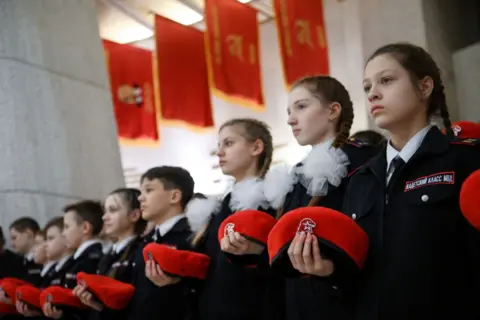
Within this context, parents like Nina from Moscow express their concerns as they witness their children participating in patriotic school events celebrating the strengths of Russia's military. The issue has gained widespread attention with the release of the Oscar-winning documentary, 'Mr Nobody Against Putin', authored by Pavel Talankin, portraying the realities of educational doctrines stemming from Moscow's narrative.
In the film, audiences encounter various vignettes from a small town in the Ural Mountains, where traditional values are championed in classrooms and school events unfold as platforms to promote allegiance to the state. One poignant moment captures a young girl, captured in her excitement, yet raising alarms for her mother who fears the influence of such messaging.
Experts weigh in, indicating that while children are inclined to accept prevailing narratives, parental input plays a crucial role during formative years. However, in Russia, where dissent is stifled, the result of indoctrination and divergent home beliefs remains unpredictable.
As schools increasingly weave historical revisionism into curriculums, parents face a balancing act—supporting their children's social engagement without endorsing propaganda. The complexity of opposing state messages in a sensitive environment is evident; educators may find themselves navigating political mandates while fostering a genuine love of learning.
Documentary footage illustrates young children singing military songs, engaging in flag ceremonies, and attending mandatory classes intended to reinforce state narratives about the war. With standards for propaganda at schools raising questions about societal impact, many families wonder what beliefs their children will internalize and how they may challenge—or conform to—these imposed ideals as they grow.
Ultimately, the challenge lies in fostering open discussions about values of humanity and conflict resolution while ensuring children feel included in their communities amidst the suffocating presence of governmental messaging.