Over the past 10 months, Russian losses in the war with Ukraine have been growing faster than any time since the start of the full-scale invasion in 2022, BBC analysis suggests.
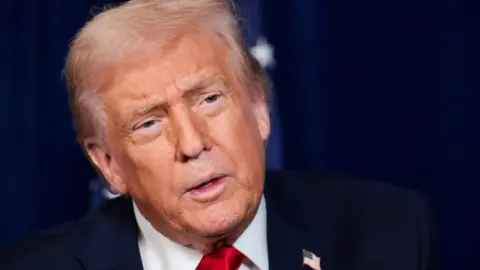
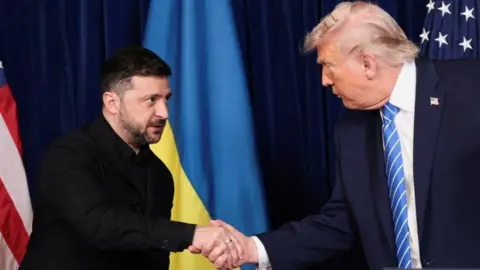
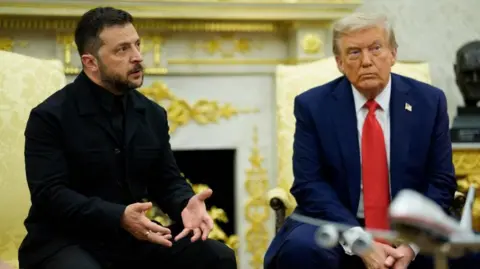
As peace efforts intensified in 2025 under pressure from US President Donald Trump's administration, 40% more obituaries of soldiers were published in Russian sources compared with the previous year.
Overall, the BBC has confirmed the names of almost 160,000 people killed fighting on Russia's side in Ukraine. BBC News Russian has been counting Russian war losses together with independent outlet Mediazona and a group of volunteers since February 2022. We keep a list of named individuals whose deaths we were able to confirm using official reports, newspapers, social media, and new memorials and graves.
The real death toll is believed to be much higher, and military experts we have consulted believe our analysis of cemeteries, war memorials and obituaries might represent 45-65% of the total. That would put the number of Russian deaths at between 243,000 and 352,000.
The number of obituaries for any given period is a preliminary estimate of the confirmed losses, as some need additional verification and will eventually be discarded. But it can indicate how the intensity of fighting is changing over time.
2025 starts with a relatively low number of published obituaries in January, compared with the previous months. Then the number rises in February, when Trump and Russian President Vladimir Putin talked directly for the first time about ending the war in Ukraine.
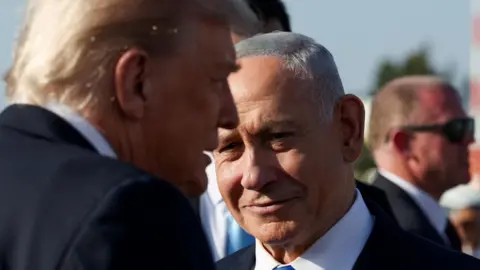
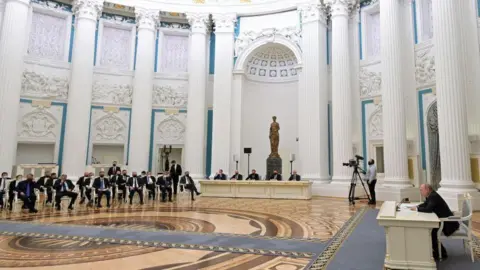
The next peak in August coincides with the two presidents meeting each other in Alaska, a diplomatic coup for Putin that was widely seen as an end to his international isolation.
In October, when a planned second Russia-US summit was eventually shelved, and then in November, when the US presented a 28-point peace proposal, an average of 322 obituaries were published per day - twice the average in 2024.
It is difficult to put increased Russian losses down to any one factor, but the Kremlin sees territorial gains as a way of influencing negotiations with the US in its favour: Putin aide Yuri Ushakov stressed recently that recent successes had a positive impact.
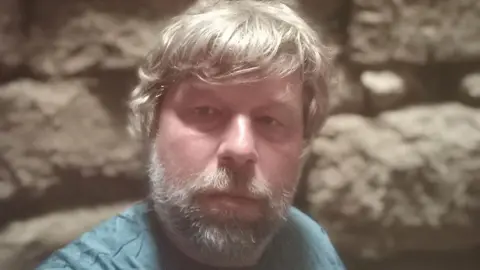
Murat Mukashev was among those who gambled on a quick peace deal, and it cost him his life. Mukashev was an activist who had never supported Putin's policies.
He had repeatedly condemned Russia's invasion of Ukraine on social media from 2022. Then, in early 2024, Mukashev was detained near his home in Moscow and charged with large-scale drug dealing.
While his case was being tried he was offered a contract with the defence ministry, but refused the offer, and the court sentenced him to 10 years in a high-security penal colony.
In prison in November 2024, he changed his mind and decided to sign up, encouraged by Trump's promises for a quick resolution to the war.
On June 11 2025, Mukashev died fighting as part of an assault squad in the Kharkiv region of north-eastern Ukraine. Like him, the majority of Russians killed at the front in 2025 had nothing to do with the military at the start of the full-scale war, BBC figures show.
Local governments, under pressure to maintain a constant flow of new recruits, offer hefty pay-outs and campaign in universities and colleges. This allows the Kremlin to compensate for heavy losses while avoiding mandatory mobilization.
According to NATO, the total number of Russian dead and wounded in the war is 1.1 million, with estimates of 250,000 fatalities.
Ukraine has also sustained heavy losses, with battlefield deaths estimated at 46,000 and injuries at 380,000.