In brief
At nearly 96, Dolores Huerta remains a prominent voice in social justice and activism. Recently, she came forward about her own experiences of sexual abuse by César Chavez, prompting discussions on how to address his legacy. Huerta's contributions to labor rights and civil rights are invaluable, as is her continued commitment to marginalized communities.
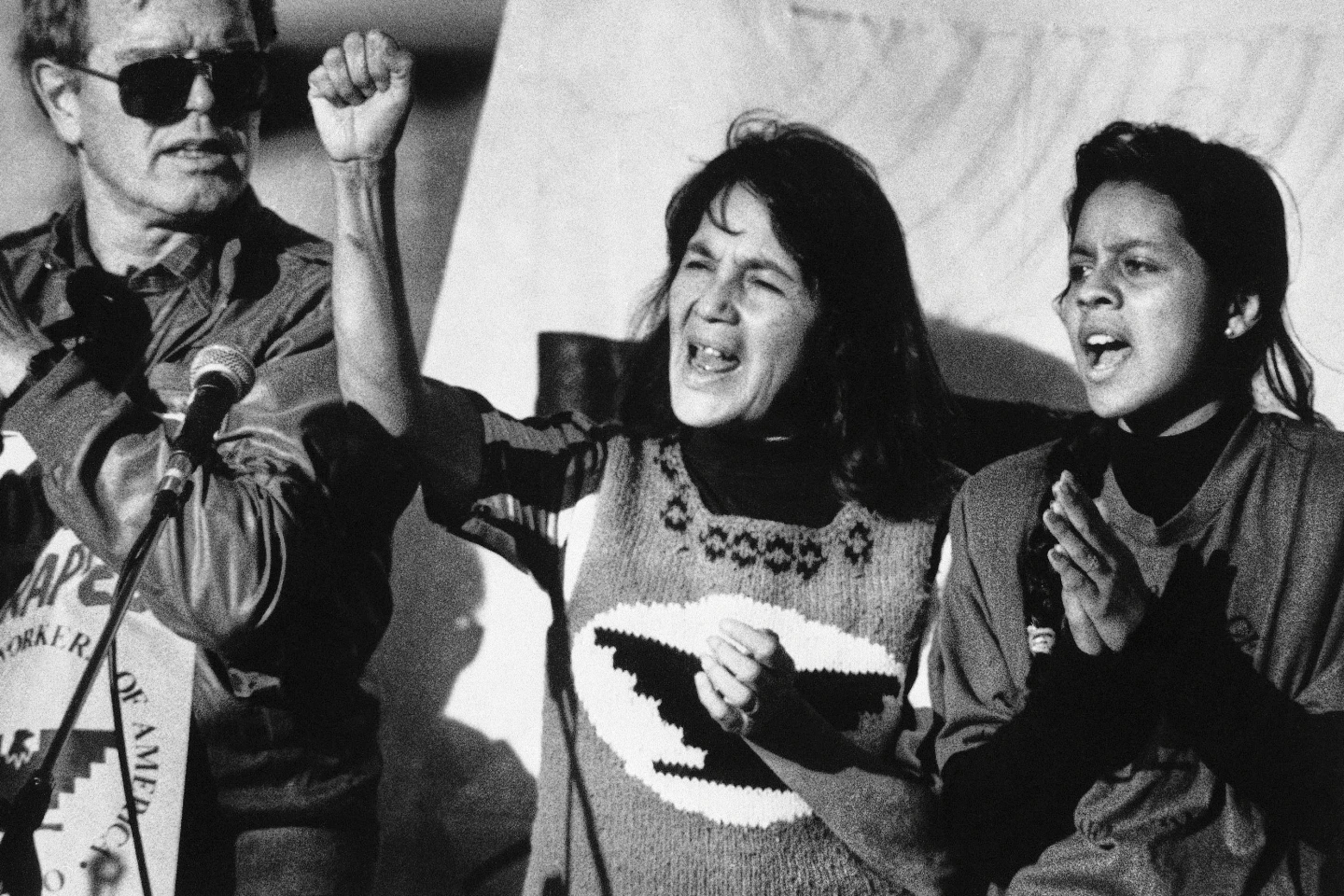
ALBUQUERQUE, N.M. — Dolores Huerta, a vital figure in the fight for farmworkers' rights and social justice, is known for her powerful slogan “Si, se puede,” which translates to “Yes, it can be done.” As co-founder of the United Farm Workers union, she has spent decades advocating for better working conditions, wages, and rights for marginalized communities.
Now at nearly 96 years old, Huerta is still speaking out, drawing from her own experiences of abuse. This week, she disclosed that she was sexually abused by César Chavez, another prominent figure in the labor movement, resulting in the birth of two children. This confession has led to a national conversation about Chavez’s legacy and the potential renaming of buildings and streets bearing his name in favor of Huerta.
The announcement caught many by surprise, revealing a painful secret Huerta kept for over 60 years. While her commitment to the labor movement has been unwavering, she felt compelled to protect its integrity over the decades.
Born in 1930 in New Mexico, Huerta was inspired by her parents, particularly her father, who was a miner and union activist. Her experiences as a teacher, particularly in witnessing the struggles of her students, propelled her into activism. In 1962, she helped establish the National Farm Workers Association, working closely with Chavez to fight for the rights of agricultural workers.
Huerta’s bravery and resilience are evident in her continued activism. She was imprisoned multiple times for protesting but never shied away from advocating for workers, women, and marginalized communities after her recovery from injuries sustained during a demonstration.
Recently, calls have emerged on social media to honor Huerta further, including renaming schools and streets in her favor. Lawmakers like U.S. Senator Martin Heinrich have praised her courage in speaking out and emphasized the importance of addressing these historical injustices.
Huerta’s contributions to civil rights have earned her numerous accolades, including the Presidential Medal of Freedom. Her ongoing work through the Dolores Huerta Foundation focuses on empowering women and advocating for social justice.
The dialogue surrounding Huerta’s confession highlights the complexities of historical figures’ legacies, encouraging society to confront uncomfortable truths while recognizing the valuable contributions of leaders like Huerta in the ongoing fight for equality.