Chinese people will pay a 13% sales tax on contraceptives from 1 January, while childcare services will be exempt, as the world's second-largest economy tries to boost birth rates.
An overhaul of the tax system announced late last year removes many exemptions that were in place since 1994, when China was still enforcing its decades-long one-child rule.
It also exempts marriage-related services and elderly care from value-added tax (VAT) - part of a broader effort that includes extending parental leave and issuing cash handouts.
Faced with an ageing population and sluggish economy, Beijing has been trying hard to encourage more young Chinese people to marry, and couples to have children.
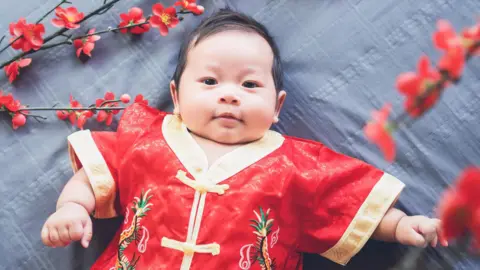
Official figures show that China's population has shrunk three years in a row, with just 9.54 million babies born in 2024. That is around half of the number of births recorded a decade ago, when China started to ease its rules on how many children people could have.
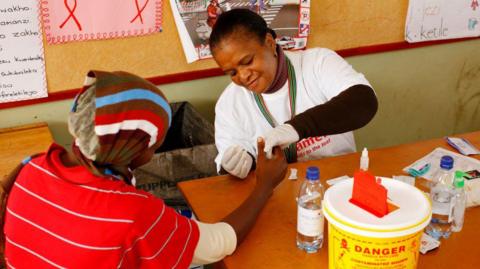
Still, the tax on contraceptives, including condoms, birth control pills and devices, has sparked concern about unwanted pregnancies and HIV rates, as well as ridicule. Some people point out that it would take a lot more than pricey condoms to persuade them to have children.
As one retailer urged shoppers to stock up ahead of the price hike, a social media user joked: I'll buy a lifetime's worth of condoms now. Others noted the stark difference between the cost of condoms versus the long-term expense of raising a child.
China is considered one of the most expensive countries in which to raise a child, according to a 2024 report by the YuWa Population Research Institute in Beijing. Costs are exacerbated by school fees in a competitive academic environment, and the struggles women face balancing work and parenting.
The ongoing economic slowdown, partly driven by a property crisis that has decimated savings, has left families, especially young people, feeling uncertain about their futures.
I have one child, and I don't want any more, says 36-year-old Daniel Luo, who lives in Henan province. It's like when subway fares increase. When they go up by a yuan or two, people who take the subway don't change their habits. You still have to take the subway, right?
Luo reports he is not concerned by the price hike, considering a box of condoms might only increase by a few yuan, making it affordable.
Observers are divided about the intended impact of the tax overhaul. Demographer Yi Fuxian asserts that Beijing is primarily looking to increase tax revenue amidst a housing market slump and growing national debt. At nearly $1 trillion, China's VAT revenue constituted close to 40% of the overall tax collection last year.
Henrietta Levin, a researcher at the Center for Strategic and International Studies, notes that while the condom tax is largely symbolic, it communicates wider issues with China’s fertility rate. Further policies encouraging births will need implementation from debt-stricken provincial governments, which raises questions about adequate resource allocation.
The government's methods to motivate couples to have children risk backfiring if perceived as intrusive, as recent reports indicate that women in some areas received intrusive queries regarding their menstrual cycles and childbearing plans from local officials.
As countries worldwide including South Korea and Japan similarly grapple with low birth rates, the burden of childcare remains a critical factor—often disproportionately borne by women. Observers highlight a trend towards less traditional interactions as people, including young adults in China, increasingly lean into digital comforts amidst societal pressures.