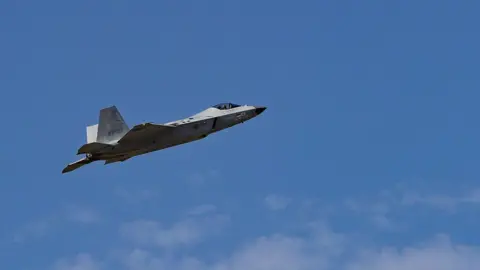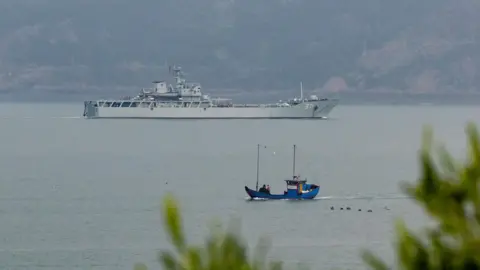
China has announced it will hold military drills around Taiwan simulating the seizure and blockade of the island's key areas, as a warning against separatist forces. The military exercise is scheduled for Tuesday and will involve the army, navy, air force, and rocket forces, including live-fire situations.
Codenamed Justice Mission 2025, these drills are taking place just days after the U.S. revealed one of its largest weapon packages to Taiwan, valued at $11 billion. This action has drawn strong protests from Beijing, which in response imposed sanctions on U.S. defense firms.
Taiwan's efforts to enhance its defense in 2023 have further incensed Beijing, which regards the autonomous island as its territory. The Taiwanese presidential office has criticized the impending Chinese drills, labeling them a challenge to international norms.
In a show of preparedness, Taiwan's defense ministry reported detecting Chinese military movements, leading to heightened alert among its forces. The Chinese military has referred to the upcoming exercise as a shield of justice, claiming it will thwart any attempts at independence.
While China advocates for peaceful reunification with Taiwan, it retains a law asserting the right to employ non-peaceful means against any actions perceived as secessionist. Beijing has characterized Taiwanese President Lai Ching-te's stance on independence as provocative, although Lai emphasizes Taiwan's sovereign status.
President Lai recently stated in a television interview that Taiwan must persist in raising its defense capabilities to deter potential invasions from China. He also reaffirmed his administration's commitment to maintaining the status quo in cross-strait relations while emphasizing the importance of demonstrating military strength.
The upcoming drills represent a continuation of heightened military activity in the region, especially following previous incidents that have escalated tensions, including visits by U.S. officials to Taiwan in the past year. The exercises aim not only for deterrence within the region but are also interpreted by some analysts as a response to China's cooling relations with Japan, amid growing concerns about the security landscape in East Asia.