Chemistry Nobel Deciphers Life’s Asymmetric Blueprint

By Victoria Gill, Science Correspondent
The long‑search for how life chooses one of two mirror‑image forms of molecules has been answered. French chemist Henri B. Kagan and Japan’s Kenso Soai were jointly awarded the 2026 Nobel Prize in Chemistry for their experiments that show a simple catalytic cycle can lock in a single handedness.
The Nobel Committee highlighted the importance of chirality – the property that makes a molecule exist as two non‑transferable mirror images, or enantiomers. In biology, only one version is used, such as L‑alanine in proteins and D‑glucose in carbohydrates.
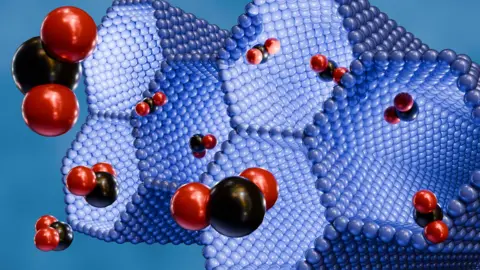
Kagan and Soai demonstrated a minimal chemical system that, once seeded with one enantiomer, would exponentially amplify that form through a self‑reinforcing reaction. This kinetic resolution mechanism explains how life’s molecular asymmetry could have arisen from simple chemistry, without requiring an external chiral influence.
The discovery has far‑reaching implications. Pharmaceutical production often requires a single enantiomer, and understanding the origin of biological handedness could provide new strategies for synthesising enantiomerically pure compounds. It also offers clues about the conditions of early Earth that allowed life to lock into its current molecular dialect.
Nobel laureates Kagan and Soai expressed humility, noting that many more questions now lie ahead. Their work, however, firmly establishes a concrete chemical pathway for the emergence of biological asymmetry, marking a watershed moment in the history of chemistry and biology.