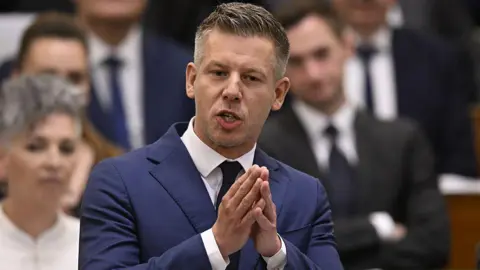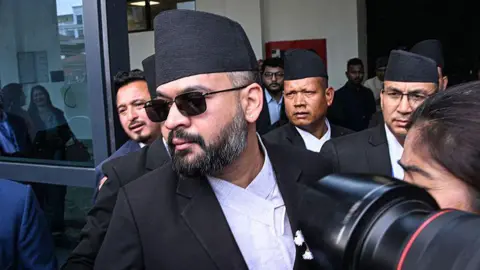
Rapper-turned-politician Balendra Shah has been sworn in as Nepal's prime minister after a landslide victory in the country's first election since last year's youth-led protests.
The 35-year-old's rise marks an important shift in Nepali politics. His promise of change resonated with an electorate that was angry at corruption, nepotism and elite rule.
Before taking office on Friday, Shah, popularly known as Balen, released a song filled with optimism about Nepal's future. Undivided Nepali, this time history is being made, he rapped in a track that garnered more than two million views within hours of its release.
The song harks back to his roots in the underground rap scene, where he used music to call out corruption and other social problems in Nepal.
After just three years as mayor of the capital Kathmandu, Shah teamed up with the Rastriya Swatantra Party (RSP) as its prime-ministerial candidate, scoring a decisive victory in general elections this month.
His supporters see him as a symbol of change and a break from the failings of Nepal's old guard. But some question whether the four-year-old RSP is capable of making good on its bold pledges.
Shah was born in 1990 in Naradevi, Kathmandu, and is his parents' youngest son. His father is an Ayurvedic practitioner and his mother stayed at home to bring up the family. Shah is married and lives with his wife and daughter.
After leaving school, he graduated with engineering degrees in Kathmandu and later in Karnataka, India. In 2013, he shot to fame after winning a popular rap battle in Nepal, with sharp verses expressing the frustration of a generation feeling suppressed and abandoned.
Shah's tenure as mayor was marked by efforts to clean up the city, preserve indigenous heritage, and a crackdown on corruption. However, he faced criticism from rights groups for his heavy-handed approach against street vendors.
From the protests that erupted last September, where anger against corruption and economic stagnation was palpable, Shah's messages and music resonated with many young voters. His election campaign strategy, largely through social media, allowed him to present a fresh image while bypassing traditional media scrutiny.
Though he is receiving accolades for his victory, Shah now faces skepticism regarding his party's ability to fulfill ambitious promises amidst ongoing social and economic challenges.