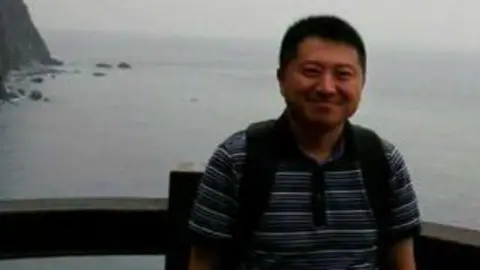
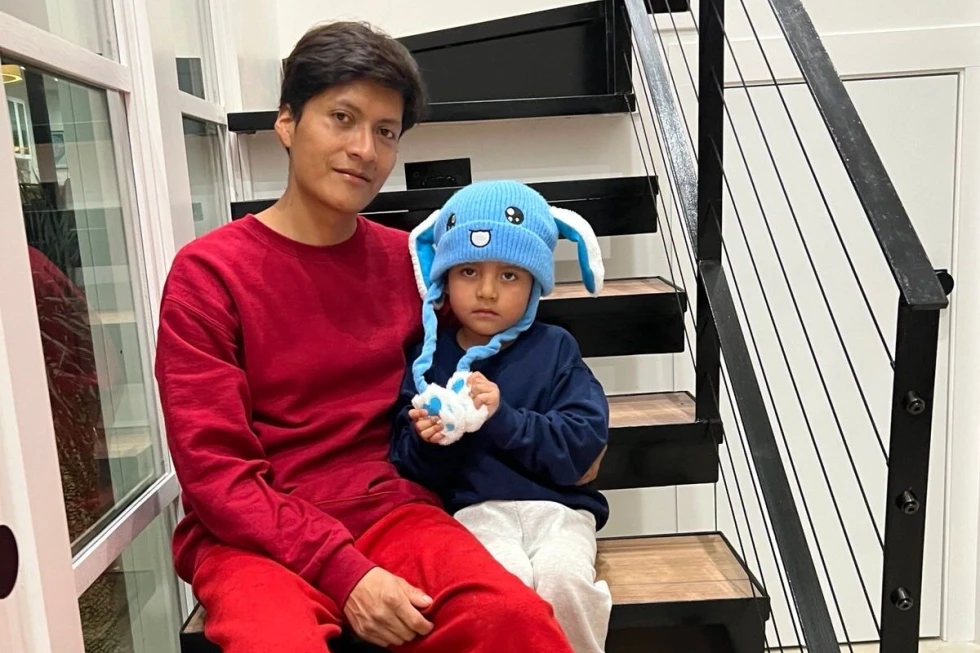
Guan Heng, a Chinese national who exposed human rights abuses in his homeland, has been released from federal detention more than five months after being swept up in the Trump administration’s mass immigration enforcement operation.
Guan was released and reunited with his mother on Tuesday, nearly a week after being granted asylum by an immigration judge who determined that he faced a well-founded fear of persecution if sent back to China.
“I’m in a great mood,” Guan, 38, told reporters. “I didn’t feel the excitement yesterday. I felt I was still in prison, but today many friends have come to see me.”
Staying temporarily in Binghamton, New York, Guan has not yet thought about his long-term plans.
His mother, Luo Yun, who traveled from Taiwan to support her son, expressed her relief. “For five and half months I didn’t sleep one good sleep, but today I feel assured,” she said.
Guan’s case marks a rare successful outcome for an asylum seeker since President Trump’s administration began tightening immigration policies. At one point, Guan was threatened with deportation to Uganda, but the Department of Homeland Security dropped that plan following public outcry and attention from Congress. The DHS has not confirmed if it will appeal the judge’s ruling.
Rep. Ro Khanna, a top Democrat on the House Select Committee on the Chinese Communist Party, stated, “His release is a reminder that the rule of law and our moral duty to protect those who expose human rights abuses go hand in hand.”
In 2020, Guan secretly filmed detention facilities in Xinjiang, which aids in the documentation of what human rights activists allege to be widespread abuses against ethnic minorities, particularly the Uyghurs. The Chinese government denies these allegations, stating its efforts in the region are aimed at counter-terrorism and vocational training.
The U.S. State Department has condemned the actions of the Chinese government but refrained from commenting specifically on Guan's case due to confidentiality rules.
During his asylum hearing, Guan revealed he did not initially intend to seek asylum; he simply wanted to document the suffering of the Uyghurs, knowing he could only publish the footage if he managed to escape China. His journey to the U.S. included stops in Hong Kong, Ecuador, and the Bahamas before arriving in Florida in October 2021.