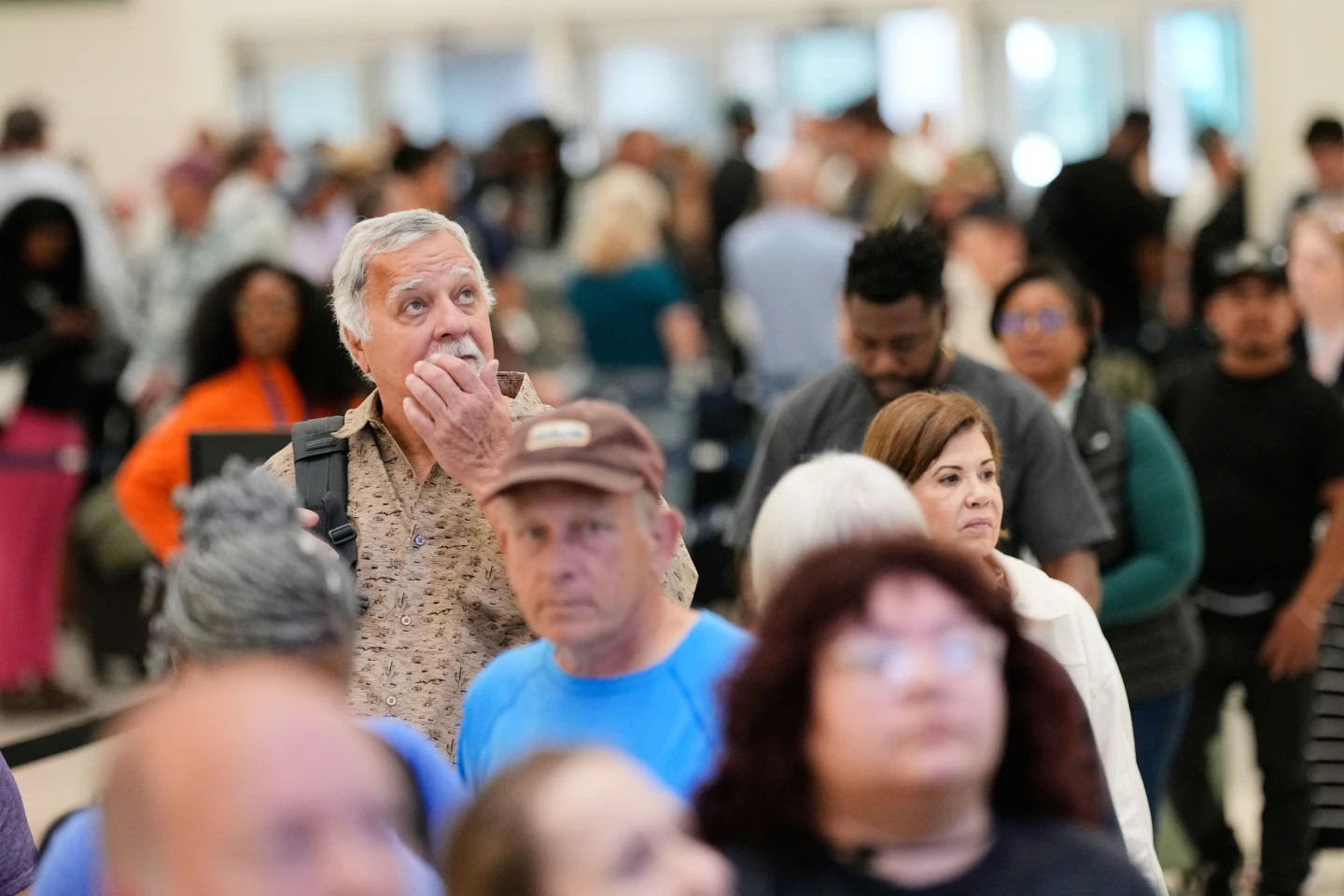
WASHINGTON — Air travel is facing a critical situation as the Transportation Security Administration (TSA) reports unprecedented wait times at airports throughout the nation. Ha Nguyen McNeill, the acting head of the TSA, testified before Congress on Wednesday, revealing that airport wait times have reached an all-time high amid ongoing funding disputes that have left TSA workers unpaid and struggling to make ends meet.
McNeill painted a grim picture of the hardships faced by TSA employees, citing issues such as unpaid bills, eviction notices, and even having to sell blood plasma to survive. This is a dire situation, McNeill stated, urging lawmakers to ensure such conditions never arise again.
Despite calls for urgent action, the government remains in a standoff, with no clear path forward in resolving funding disputes between Republican and Democratic leaders. While Republicans have presented a proposal to fund most aspects of the Department of Homeland Security (DHS), significant concerns persist over immigration enforcement policies, which have become a pivotal point of contention.
Republican senators assert that Democrats are prolonging the crisis, endangering the country's security. Conversely, Democrats are insisting that real reforms to DHS and a restraint on ICE operations are necessary, especially following tragic incidents that spotlighted federal enforcement practices.
Imminent Threat of Longer Lines
The TSA's challenges are compounded by high rates of absenteeism as many staff members are calling out or resigning. Reports indicate that some airports are experiencing call-out rates exceeding 40%, jeopardizing security operations. McNeill reported an alarming increase in assaults against TSA officers, highlighting the volatile atmosphere amid the shutdown.
In Houston, airport officials warned that security lines could stretch over four hours if the impasse continues, due to the TSA only staffing a fraction of its usual checkpoint personnel. The longer travelers wait, the more frustration grows, and tensions rise with the ongoing involvement of ICE agents.
FEMA's Disaster Relief Fund at Risk
It’s not just the TSA that is under strain; FEMA’s Disaster Relief Fund is also dwindling. Officials warn that without replenishment, disaster response efforts could be compromised, leaving many at risk in the face of natural disasters.
The situation remains fraught, with the potential for further complications if lawmakers fail to address rising concerns. As the weeks pass, travelers and employees alike hope for a swift resolution to restore normalcy and security to air travel.