In the face of escalating tensions in Gaza, a senior Hamas official reported that mediators are ramping up efforts to secure a ceasefire and negotiate the release of hostages. However, talks with Israel remain at an impasse. The remarks came as US President Donald Trump announced that "great progress" was being made since the conclusion of a recent 12-day conflict between Israel and Iran, emphasizing that his envoy, Steve Witkoff, indicated a potential agreement between Israel and Hamas was forthcoming.
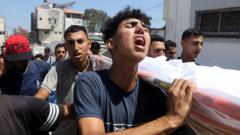
Recent Israeli air strikes on Gaza have intensified the crisis, reportedly resulting in at least 45 Palestinian deaths, including individuals seeking humanitarian aid, according to the health ministry in Gaza. The Israeli military also reported the death of seven soldiers due to a Hamas-claimed bomb attack.
President Trump noted during a press briefing in Brussels that the US's recent military strikes on Iranian nuclear targets had positively influenced the Gaza situation. He expressed optimism about achieving a ceasefire, stating, "I think we're going to have some very good news," referencing insights from Witkoff. Nevertheless, the unnamed Hamas official clarified to the BBC that while mediator engagement had increased, no new proposals had been presented.
An Israeli official echoed this sentiment, acknowledging stalled negotiations and significant disagreements. Diplomatic efforts spearheaded by the US, Qatar, and Egypt foundered last May after Hamas proposed amendments deemed "totally unacceptable" by the US, which required a 60-day ceasefire for half the living Israeli hostages and half those who have died to be released.
Recent military actions by Israel had recommenced as of March 18, renewing hostilities shortly after a two-month truce. The Israeli government’s stringent blockade on humanitarian aid deliveries triggered outcry from global advocates, who warned that thousands were at risk of starvation. The establishment of a new aid distribution mechanism by the Gaza Humanitarian Foundation (GHF), supported by Israel and the US, aimed to bypass the UN and curb alleged aid misappropriation by Hamas.
Despite its claims of productivity, the GHF's operations have drawn criticism from other humanitarian groups, which accuse it of aligning with Israeli objectives improperly. Reports indicate severe casualties among Palestinians seeking aid, with 549 deaths and 4,000 injuries recorded after the GHF began its distributions on May 26. Hamas officials reported that at least six individuals died due to Israeli fire while waiting for aid at GHF locations on Wednesday.
Compounding the tragedy, another air strike in the Nuseirat refugee camp claimed six lives, including a child. Though Israeli military spokespeople denied awareness of such incidents, reports from Gaza documented an ongoing humanitarian crisis with no signs of abating.
Community reactions in Gaza displayed a spectrum of concerns regarding the potential ceasefire and ongoing violence. Some residents viewed the reduction in Iran's sway over Hamas as possibly opening dialogue avenues, while others feared renewed Israeli military focus would exacerbate the situation.
In stark contrast, recent casualties among Israeli soldiers throughout the conflict escalated pressure within the Israeli government, with public politicians calling for a ceasefire and the return of hostages. The humanitarian toll since Hamas's attack on Israel on October 7, 2023, which saw 1,200 Israelis perish and over 250 hostages taken, has driven a reported 56,157 Palestinian deaths since the conflict's outbreak.