In brief
As Poland prepares for a crucial presidential election this Sunday, polls indicate a likely runoff between liberal Mayor Rafal Trzaskowski and conservative historian Karol Nawrocki. With a significant political history shaped by two dominant parties, many citizens express fatigue over the choice between familiar rival factions. Incumbent President Andrzej Duda's term concludes, leaving a pivotal moment for voters hoping for change amidst criticism of both liberal and conservative ideologies.
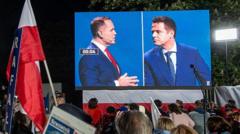
The battle for Poland's presidency looms large as citizens head to the polls on Sunday. Opinion polls suggest a looming second round run-off may take place between two starkly contrasting front-runners: liberal Mayor Rafal Trzaskowski from the Civic Platform (PO) and conservative historian Karol Nawrocki of the Law and Justice (PiS) party. Both candidates symbolize the longstanding political rivalry in Poland, and many voters express dissatisfaction with the options available to them. Trzaskowski, the current mayor of Warsaw, leads in the polls as the deputy leader of Prime Minister Donald Tusk's PO. Nawrocki follows closely but remains 4%-6% behind. The Polish presidency holds significant power, notably the ability to veto legislation, making this election especially consequential. The outgoing President Duda, who is barred from seeking a third term, has previously utilized his veto power effectively against Tusk's coalition, which lacks a strong parliamentary majority.Critics, including political analysts, argue that Tusk's return to power in late 2023, following a campaign framed as a return to liberal democracy, has fallen short of expectations. Tusk and his coalition amassed power amidst claims of right-wing authoritarianism under the PiS-led government. However, doubts linger regarding whether Tusk can fulfill his campaign promises, such as reforming abortion laws and immigration policies.The election also sees debates that highlight the polarization in Polish society as Trzaskowski's strong stance on LGBTQ+ rights contrasts sharply with Nawrocki's conservative values. While some citizens have expressed a desire for progressive change, the efficacy of Tusk's coalition has come under scrutiny, leading to disillusionment among voters.As the political discourse shifts heavily toward security and migration issues in light of regional tensions, voters grapple with fundamental concerns about the future direction of the country. Even within Tusk's coalition, disagreements over key issues threaten to impede progress, adding to the electorate's frustration.Emerging candidates also reflect a broader discontent within Polish politics. The far-right libertarian candidate Slawomir Mentzen previously gained traction but has seen a decline in support due to controversial statements. The overarching sentiment among voters illustrates a yearning for leadership that breaks free from entrenched political dynamics, ushering in a new era of dialogue rather than division.With the presidential election imminent, Polish citizens are faced with the stark reality of a traditional political landscape, stifled by a sense of futility and desire for change. As they prepare to cast their votes, the outcome may have profound implications for Poland's political future and its place within Europe.