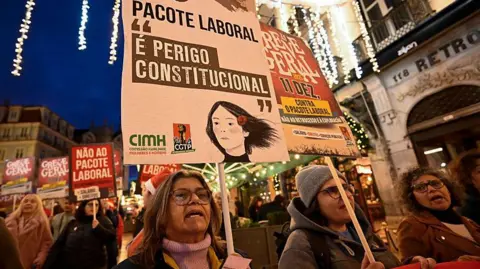
Dozens of flights and trains have been cancelled, schools closed, and hospital operations postponed as Portugal faces its first general strike in 12 years, led by the two major union federations opposing significant labor reforms proposed by Prime Minister Luís Montenegro.
Public transport services operated at a minimum level, and waste collection came to a complete halt as the strike commenced on Thursday. The last time the CGTP and UGT joined forces was during the eurozone debt crisis in 2013 when severe austerity measures were implemented.
Despite being recognized for a growing economy, with Portugal becoming the fastest in the eurozone recently, PM Montenegro insists that reforms are essential to eliminate rigidities in the labor market, claiming that they will lead to increased profitability for companies and better salaries for workers.
On the eve of the strike, Montenegro stated, I will not give up on having a country with the ambition to be at the forefront of Europe. Yet, the level of dissent suggests he may have underestimated the opposition to his government's plans.
Some of the proposed reforms are particularly controversial, including allowing employers to extend temporary contracts indefinitely, lifting bans on re-hiring dismissed employees indirectly, and abolishing the requirement to reinstate unfairly dismissed workers. These changes are expected to mainly impact the younger workforce.
Various perspectives emerged as opinions within the society varied. Air steward Diogo Brito supports the right to strike while backing the government's reform package, arguing that it is necessary for Portugal's economic advancement. Conversely, self-employed photographer Eduardo Ferreira expressed support for union efforts, highlighting the struggles faced by many seeking secure employment.
Both the CGTP and UGT condemned the reform package as being harmful to worker rights, particularly targeting young and female employees.
Moreover, with the government lacking a parliamentary majority and courting support from smaller, right-wing parties, opposition grows as unions warn that the proposed reforms reflect an increasing bias favoring employers.
Upcoming elections and scrutiny regarding the reforms may heighten voter dissatisfaction as the unions fight to protect employee rights against a backdrop of economic challenges.