In brief
At the G20 foreign ministers’ meeting in Atlanta, Turkey’s Foreign Minister Hakan Fidan appealed to Russia and Ukraine to make “significant sacrifices” to secure a peace deal and warned of a broader regional conflict. He noted the economic toll of the war, the impact of the Strait of Hormuz shutdown, and the halt to Black Sea grain shipments, urging a revived relationship between Russia and Europe as part of an enduring settlement.
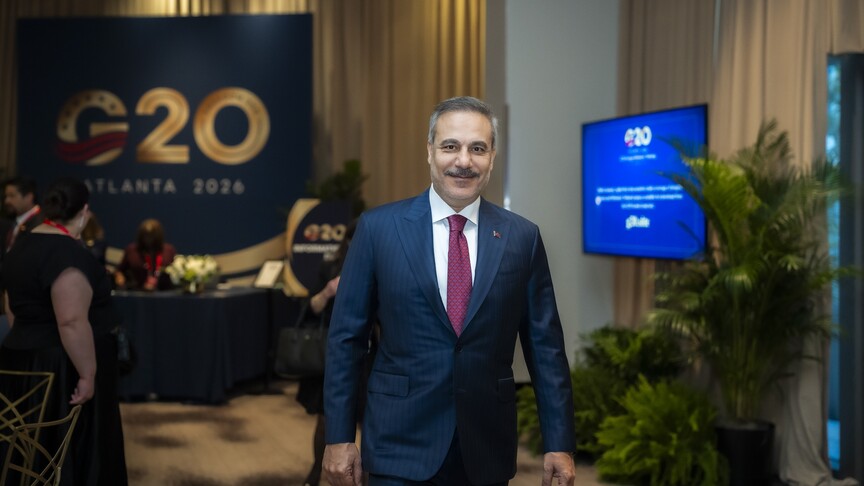
On 1 November 2026, Turkish Foreign Minister Hakan Fidan spoke on the sidelines of the G20 foreign ministers’ gathering in Atlanta, US, urging Russia and Ukraine to reach a peace treaty that would involve “significant sacrifices” from both sides. The call came amid the five‑year war that, according to Fidan, has inflicted severe damage on the global economy and poses a risk of further regional escalation.
Fidan’s remarks were made in front of Anadolu Agency reporters and the Turkish national broadcaster TRT. He opened by stating,
This war is no longer sustainable. Therefore, Russia and Ukraine must reach an agreement that entails significant sacrifices.He emphasized that the lack of a settlement has become increasingly “invisible” to many governments, especially in Europe, due to the multiplicity of social and economic costs.
In a follow‑up, Fidan said a lasting settlement would not only involve Russia and Ukraine but would also require a re‑defined and constructive relationship between Russia and Europe. He added,
A constructive relationship between Europe and Russia needs to be re‑defined in the aftermath of peace. This is because any peace agreement that Ukraine reaches with Russia will not be limited to those two countries alone. In a sense, Europe also needs to reconcile with Russia and restart certain aspects of their relationship. This is important.
The former Turkish minister also highlighted economic spill‑over effects. He warned that the closure of the Strait of Hormuz—used by Russia’s energy supplies—had added to global pressure and “significantly compounded” the war’s economic consequences. Fidan noted that European industries had relied on affordable Russian energy to sustain manufacturing, exports, and related financial activity, and that the disruption of these links has created far‑reaching consequences. He stressed that the mounting economic burden must be brought to an end.
In addition to the regional energy discussion, Fidan raised the problem of commercial shipping in the Black Sea. He pointed out that Russian and Ukrainian grain and energy supplies were struggling to reach international markets, posing a grave food‑security challenge. Fidan said, “Food security, in particular, is an incredibly problematic issue. It needs to be brought to a halt as soon as possible.” He also reported that Turkey was engaged in intensive diplomatic outreach and was making substantial efforts to facilitate the transportation of grain from the Black Sea to the world.
While Fidan did not delineate a specific proposal for a ceasefire in this address, he did signal that Ankara is actively seeking to mediate. He conveyed that Turkey was working to restore trade links in the Black Sea and was hopeful that economic pressures might spur both parties toward a negotiated solution. These remarks align with Ankara’s broader strategy of presenting itself as a neutral broker between increasingly estranged neighbors.
Following the statements, the international community noted the urgency of Fidan’s warning. Commentators observed that Russia and Ukraine face mounting diplomatic and economic isolation, and that the possibility of the conflict spreading beyond its current borders remains a tangible threat. The president of the European Union’s foreign affairs committee remarked that a unified European stance toward Russia would be essential in any exchange that promises lasting peace.
Currently, both Russia and Ukraine have not responded publicly to the Turkish minister’s remarks. The next steps will likely involve translation of Fidan’s proposals into concrete actions by respective governments and the G20’s commitments to support a resolution framework. The broader diplomatic scene will retest Turkey’s mediating role in the evolving geopolitical climate.