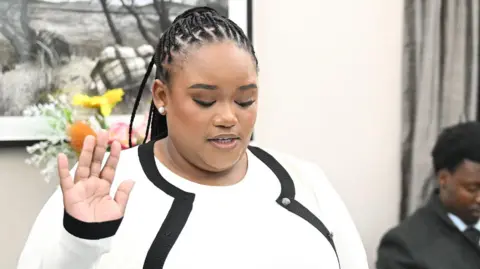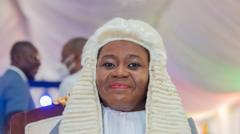
Ghana's judiciary is amidst a political storm after President John Mahama's controversial suspension of Chief Justice Gertrude Torkornoo on Wednesday. This move marks the first time in the nation's history that a chief justice has faced suspension, prompting fierce backlash from opposition MPs, who accuse Mahama of attempting to "pack the courts" with justices favorable to the ruling National Democratic Congress (NDC).
Torkornoo's removal came on the heels of three anonymous petitions that allegedly contained serious claims against her, although the specifics of these allegations have not been disclosed. As of now, Torkornoo has not publicly responded to the situation. Mahama's allies, however, support the suspension as a necessary step to address judicial failings.
Opposition lawmakers have expressed outrage, calling the suspension a "brazen judicial coup" and an affront to the independence of Ghana's judiciary. They have issued statements labeling the president's actions as a reckless misuse of power. "This is nothing short of a brazen judicial coup," stated the opposition caucus, highlighting that due process was violated when Mahama acted before the Supreme Court could rule on ongoing lawsuits challenging the legality of the suspension procedure.
Legal experts and former officials have weighed in on the controversy. Former Attorney General Godfred Yeboah Dame characterized the suspension as a "complete charade" and the "biggest assault on the judiciary" in Ghana's history. Meanwhile, supporters of the president, like Dr. Tony Aidoo, argue that the judicial system needed a shake-up, seemingly defending Mahama's decision as an act of maintaining the judiciary's integrity.
Criticism has been directed toward Torkornoo and her leadership of the Supreme Court, with some alleging biases toward former President Nana Akufo-Addo’s administration in politically sensitive cases. Notably, her appointment by Akufo-Addo in 2023 raises questions around partisan loyalties within the judiciary.
Under Ghanaian law, chief justices may only be removed on specific grounds such as misconduct or incompetence, making the current situation unusual. Thus far, Torkornoo has not faced such allegations from credible sources, and past attempts to remove her were thwarted due to procedural deficiencies.
The presidency has since constituted a five-member committee to investigate the allegations made against Torkornoo, as political and legal ramifications continue to unfold in this high-stakes scenario. Given that Ghana has seen its chief justices serve without removal through previous administrations, this unprecedented development signifies a crucial juncture in the nation’s judicial landscape.
As the investigation progresses, Ghanaians and political observers alike will be watching closely as public discourse around judicial independence, executive power, and accountability shapes the future of the courts in the country.
Torkornoo's removal came on the heels of three anonymous petitions that allegedly contained serious claims against her, although the specifics of these allegations have not been disclosed. As of now, Torkornoo has not publicly responded to the situation. Mahama's allies, however, support the suspension as a necessary step to address judicial failings.
Opposition lawmakers have expressed outrage, calling the suspension a "brazen judicial coup" and an affront to the independence of Ghana's judiciary. They have issued statements labeling the president's actions as a reckless misuse of power. "This is nothing short of a brazen judicial coup," stated the opposition caucus, highlighting that due process was violated when Mahama acted before the Supreme Court could rule on ongoing lawsuits challenging the legality of the suspension procedure.
Legal experts and former officials have weighed in on the controversy. Former Attorney General Godfred Yeboah Dame characterized the suspension as a "complete charade" and the "biggest assault on the judiciary" in Ghana's history. Meanwhile, supporters of the president, like Dr. Tony Aidoo, argue that the judicial system needed a shake-up, seemingly defending Mahama's decision as an act of maintaining the judiciary's integrity.
Criticism has been directed toward Torkornoo and her leadership of the Supreme Court, with some alleging biases toward former President Nana Akufo-Addo’s administration in politically sensitive cases. Notably, her appointment by Akufo-Addo in 2023 raises questions around partisan loyalties within the judiciary.
Under Ghanaian law, chief justices may only be removed on specific grounds such as misconduct or incompetence, making the current situation unusual. Thus far, Torkornoo has not faced such allegations from credible sources, and past attempts to remove her were thwarted due to procedural deficiencies.
The presidency has since constituted a five-member committee to investigate the allegations made against Torkornoo, as political and legal ramifications continue to unfold in this high-stakes scenario. Given that Ghana has seen its chief justices serve without removal through previous administrations, this unprecedented development signifies a crucial juncture in the nation’s judicial landscape.
As the investigation progresses, Ghanaians and political observers alike will be watching closely as public discourse around judicial independence, executive power, and accountability shapes the future of the courts in the country.