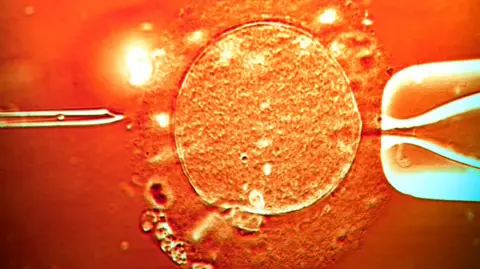
A sperm donor who unknowingly harbored a genetic mutation that dramatically raises the risk of cancer has fathered at least 197 children across Europe, a major investigation has revealed.
Some children have already died, and only a minority who inherit the mutation will escape cancer in their lifetimes.
The sperm was not sold to UK clinics, but the BBC can confirm a very small number of British families, who have been informed, used the donor's sperm while having fertility treatment in Denmark.
Denmark's European Sperm Bank, which sold the sperm, said families affected had their deepest sympathy and admitted the sperm was used to make too many babies in some countries.
The investigation involved 14 public service broadcasters, including the BBC. The sperm came from an anonymous donor paid to donate as a student, starting in 2005, and was used by women for around 17 years.
This donor screened healthy during health checks. However, a mutation in the TP53 gene presents grave risks, potentially leading to lifelong cancer risks in children conceived from his sperm.
Alarmingly, up to 20% of the donor's sperm contained the dangerous mutation, putting subsequent children at up to a 90% risk for various cancers. Prof. Clare Turnbull, a cancer geneticist, emphasized the devastating impact of such diagnoses on families.
Children with inherited mutations would require regular MRIs and ultrasound screenings while facing overwhelming anxiety from the risks of serious illness.
Authorities across Europe have taken serious note of this situation, particularly concerning the stringent limits around sperm donation that vary by country and have been bypassed in some instances, including those in Belgium, bringing urgency to the need for better regulations regarding donor sperm usage.
As families affected seek support and guidance, experts call for immediate dialogue and action to address the implications of these troubling revelations.