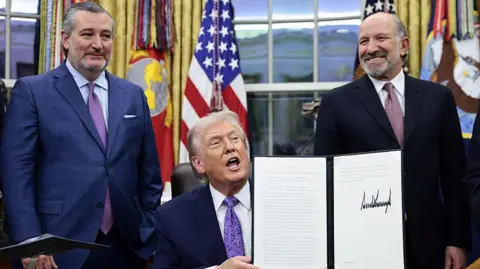
In a notable shift within the White House, President Trump announced the removal of his national security adviser, Michael Waltz, on Tuesday. This shake-up marks the administration's first significant personnel change during Trump's second term. Appointing Secretary of State Marco Rubio as the interim national security adviser, Trump aims to stabilize his team amid ongoing tensions regarding foreign policy.
The decision to let Waltz go follows a misstep where he established a Signal group chat to deliberate on a sensitive military operation in Yemen, inadvertently including a journalist. Although Waltz has been nominated to serve as the U.S. ambassador to the United Nations, his tenure was already under scrutiny due to his perceived hawkish approach, which contrasts with Trump's goals of fostering nuclear negotiations with Iran and building more amicable ties with Russia.
Rubio's dual role as both national security adviser and secretary of state is unprecedented since Henry Kissinger's tenure during the Nixon and Ford presidencies. This dual appointment indicates the urgency of the situation as the administration grapples with divergent viewpoints among its advisers on critical issues regarding China, Russia, and Iran.
What's next? The appointment of a new, permanent national security adviser will play a pivotal role in shaping the administration's foreign policy direction as it navigates these pressing global challenges.
In related news, an Abu Dhabi-backed fund is poised to engage in a $2 billion deal utilizing digital coins from the Trump family's cryptocurrency enterprise. Meanwhile, tech entrepreneur Elon Musk appears to be reevaluating his fiscal ambitions following the Trump administration's initial 100 days. As nations adapt to the evolving geopolitical landscape, Trump continues to influence global commitments and relationships.
The decision to let Waltz go follows a misstep where he established a Signal group chat to deliberate on a sensitive military operation in Yemen, inadvertently including a journalist. Although Waltz has been nominated to serve as the U.S. ambassador to the United Nations, his tenure was already under scrutiny due to his perceived hawkish approach, which contrasts with Trump's goals of fostering nuclear negotiations with Iran and building more amicable ties with Russia.
Rubio's dual role as both national security adviser and secretary of state is unprecedented since Henry Kissinger's tenure during the Nixon and Ford presidencies. This dual appointment indicates the urgency of the situation as the administration grapples with divergent viewpoints among its advisers on critical issues regarding China, Russia, and Iran.
What's next? The appointment of a new, permanent national security adviser will play a pivotal role in shaping the administration's foreign policy direction as it navigates these pressing global challenges.
In related news, an Abu Dhabi-backed fund is poised to engage in a $2 billion deal utilizing digital coins from the Trump family's cryptocurrency enterprise. Meanwhile, tech entrepreneur Elon Musk appears to be reevaluating his fiscal ambitions following the Trump administration's initial 100 days. As nations adapt to the evolving geopolitical landscape, Trump continues to influence global commitments and relationships.