
In brief
Israeli forces fired on several districts of southern Lebanon in a series of demolition and artillery attacks on Saturday, with Lebanese state media reporting shelling near Wadi al-Hujair, Bani Hayyan, and other districts, while the Lebanese Health Ministry cited 4,390 deaths and over 12,400 injuries since March 2. The attacks highlight the tenuous situation even as Israel remains present in occupied territory.
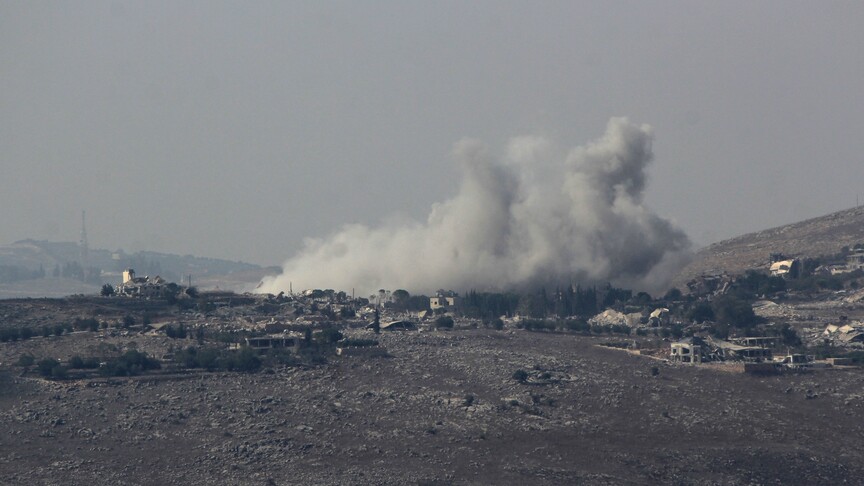
The Israeli army carried out a demolition operation in Bani Hayyan and shelled the outskirts of Wadi al-Hujair on Saturday, continuing hostilities in southern Lebanon despite a United States‑brokered framework deal signed in June, Lebanese state media reported.
The National News Agency (NNA) said the army also conducted search operations in Khiam and the Marjayoun district, and launched artillery fire on the outskirts of Baraachit and Wadi Zibqin overnight.
Earlier that evening, Israeli artillery targeted the al‑Arayesh area between the towns of Haris and Hadatha, and fired heavy machine guns toward the outskirts of Mansouri and Bayut al‑Sayyad, south of Tyre, alongside further shelling.
The June framework outlines a gradual Israeli withdrawal from occupied Lebanese territory in exchange for the deployment of the Lebanese army and its assumption of security responsibilities there.
Lebanon’s Health Ministry said Thursday that Israeli attacks since March 2 had killed 4,390 people and wounded 12,429 as of Nov. 5.
Those figures reflect the toll of the conflict that began in March, when Israeli forces advanced roughly ten kilometres into Lebanese territory after the 2023‑2024 war.
The recent assaults have intensified concerns over civilian safety in the afflicted districts and underscored the fragility of the ceasefire conditions.
Framework deal implications
The United States brokered the framework in June, calling for a phased Israeli withdrawal from territories occupied for decades and those seized during the 2023‑2024 incursion.
In return, the Lebanese army would take control of security in those areas, a move that Lebanon’s officials claim would restore sovereignty.
However, the continued artillery and demolition sorties demonstrate that the engineering of stability remains unsettled, according to Lebanese state media.
Observers note that the Israeli operations persist despite the framework’s stipulations, raising questions about the pace of the agreed incremental disengagement.
For residents in towns like Bani Hayyan, Khiam, and the outskirts of Tyre, the combination of demolition and shelling has compounded the devastation already inflicted by months of conflict.
Health ministry statistics record hundreds of thousands of displaced individuals, and the strain on local hospitals has escalated in the wake of the latest attacks.
International actors have called on both sides to adhere strictly to the framework, warning that further escalation could reverse gains made since the June agreement.
As the situation continues to evolve, Lebanese officials and the Israeli Defence Forces maintain that the framework remains a viable path toward a lasting resolution, though skepticism over its implementation grows.



