In brief
Mohamed Suleiman, a trapped journalist in Sudan, recounts the emotional turmoil of receiving three years' worth of missed messages all at once after gaining access to communication in Port Sudan. His powerful narrative sheds light on the sustained violence and humanitarian crisis stemming from ongoing conflict, emphasizing the dire need for international attention and intervention.
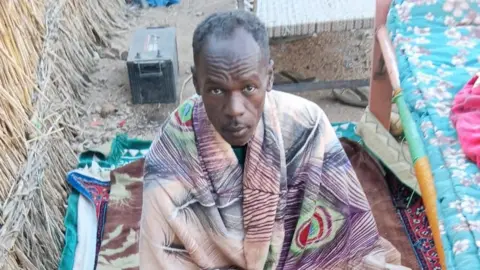
Soon after Mohamed Suleiman entered the telecoms office in the coastal city of Port Sudan on 13 January, he started to cry. He hadn't heard his phone ring for most of Sudan's civil war, which began exactly three years ago following a power struggle between the army and the Rapid Support Forces (RSF) paramilitary group.
The journalist and academic had made it to Port Sudan after being trapped in the western city of el-Fasher, largely cut off from the world by a communications blackout and unable to convey fully the horrors he was witnessing. I was flustered because people were talking on their phones (inside the office), he tells the BBC.
When his phone finally sprang to life, it was pinging with three years' worth of messages, an inventory of loss: news of colleagues who had died, friends asking whether he was still alive. A few days ago, a person called me saying he thought I had died, he says. Some people had told him that I was in Port Sudan, so he called me, but he didn't believe (it was me) until I called him back by video, then he broke down in tears.
In some ways, the silence was almost as deadly as the violence, Suleiman says. He describes it as a suffocating feeling because I was watching systematic killings through drone strikes and bombs or deadly killing through the tight siege imposed on el-Fasher by the RSF for 18 months. When the RSF finally took over the city in October last year, It was like the Day of Judgment on Earth, he reflects.
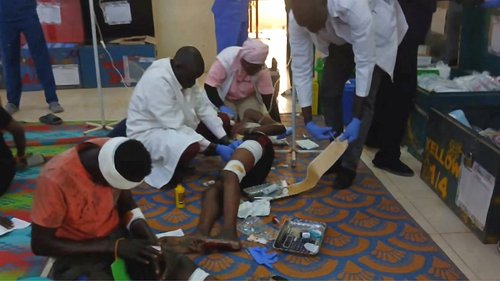
The fall of el-Fasher was one of the most brutal chapters in the civil war, which began in the capital Khartoum on 15 April 2023. As the conflict enters its fourth year, the fighting has led to a de-facto partition between territory held by the army and the paramilitaries, forcing millions of Sudanese citizens to scatter, some fleeing the country entirely amid the world's worst humanitarian crisis.
Now safely in Port Sudan, Suleiman's narrative reflects the continued darkness of his experiences. Despite being reconnected to the world through technology, he expresses bitterness about the lack of international action and humanitarian aid. Now that I'm here, it feels like the world has not returned to me. There is no discharge from an international law, no ceasefire, no basic necessities of life. His story is not only one of survival but a call to remember the countless lives affected by the ongoing turmoil.