In brief
Residents in Johannesburg's affluent neighborhoods are protesting against ongoing water shortages, some lasting months. Many believe that criminal syndicates, dubbed 'water mafias', are exploiting the situation by monopolizing water delivery services. Despite government assurances and proposals to tackle the crisis, the situation remains dire, with clean water access still elusive for many communities. Local leaders call for urgent action to restore reliable water supply and combat corruption.
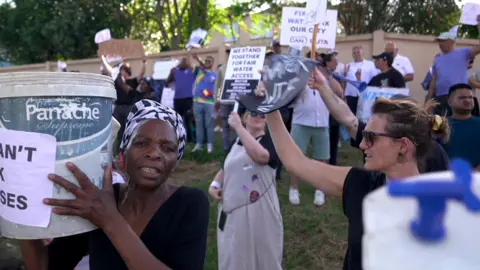
In Greenside, Johannesburg, a diverse group of protesters is raising their voices for water amid alarming reports of prolonged shortages impacting affluent and township neighborhoods alike. As citizens chant, We want water!, frustrations boil over with accounts of taps running dry for over a month. Colin Regesky, a resident of Green Hill, expresses concerns for public health in the absence of running water, stating, It's not very healthy because everyone can get sick with no running water. And also according to the constitution it's our right to have water. Similar sentiments are echoed by long-time resident Jenny Gillies from Melville, who laments, I am here today because it is an actual disgrace. We are reduced to begging and protesting for water. Recent years have seen Johannesburg suffering from extensive electricity outages, known as load shedding, and now the water crisis overshadows the ongoing power issues. Adding to the problem, some areas like Hammanskraal—over 100km away—report that residents haven't had access to clean water for over two months, revealing a deepening crisis exacerbated by potential exploitation from organized crime. The phenomenon of 'water mafias'—criminal groups believed to monopolize water supply via privatized tanker services—has come to the forefront, as municipal failures worsen the woes of citizens already coping with the inadequacies in basic services. Dr. Ferrial Adam from Watercan explains that these syndicates either mismanage municipal contracts for water supply or create artificial shortages to prolong profit. Some truck drivers reportedly demand payment for what should be free water, leaving poorer households grappling with corruption amidst dire conditions. While the government has promised to take action, residents and local leaders express skepticism about the effectiveness of proposed solutions, calling for immediate investments in infrastructure and accountability for corruption. The cries of citizens resonate as they await real and lasting changes in their water supply situation.