In brief
Despite the eccentric energy of Sam Battle's entry 'Eins, Zwei, Drei', the UK finished last at Eurovision 2026, accumulating only one point. This marks the third time since 2020 that the UK has found itself at the bottom of the leaderboard, reigniting discussions on the nation's hampered strategies in the annual contest. From inconsistent song selections to wavering public interest, the country's successive setbacks in Eurovision highlight a pressing need for introspection and a rejuvenated approach to the competition.
After yet another disappointing performance at Eurovision 2026, the UK grapples with the reasons behind its consistent lack of success in the competition. While musician Sam Battle aimed to make a bold statement, the result speaks volumes about the underlying issues in the UK's approach to the contest.
Another year, another flop. The UK has self-destructed at Eurovision all over again. Look Mum No Computer, aka musician Sam Battle, got one solitary point, ending up in last place. It's the third time we've been at the bottom of the table since 2020. We've made the top 10 once since 2010. This is the fourth consecutive year I've written a post-mortem on our failure.
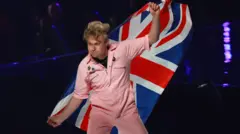
In the run-up to the contest, there was little hope that Sam's shouty synth-pop banger 'Eins, Zwei, Drei,' would fare well. But the musician gave it his all, stomping around the stage in a bright pink boiler suit while singing about quitting his office job to go to Germany and count to three. It was, as Graham Norton observed, a big swing.
The song's hiccupy beat and zany references left Europe bewildered. Juries awarded it one point while the public gave it zero. Filippo Baglini, a journalist for the Italian station London One Radio, stated, The UK is the best at music all around the world. You have the Beatles and everything. So this is not good enough. Meanwhile, Austrian Eurovision fan Thomas Tammegger criticized the BBC's lighthearted approach, arguing it hindered serious consideration for strong entries.
What will it take for the UK to turn its Eurovision fortunes around? In Finland, similar past struggles gave way to embracing quirkiness and artistic expression. Perhaps it's time for the UK to shed its hesitations and embrace its own unique musical identity while striving to engage better with audiences across Europe.