In brief
In June 2026, the Indian government temporarily banned Telegram following a scandal of leaked National Eligibility‑cum‑Entrance Test (NEET) papers, sparking a legal showdown. Telegram CEO Pavel Durov labelled the ban a mistake, arguing it would punish millions of users for a few leakers who could simply switch platforms. The ban raises questions about digital censorship, exam integrity and the reach of state power in a country where over 150 million people use the app for messaging and educational content. KEYWORDS:["Telegram","NEET 2026","exam leak","India ban","digital censorship","exam integrity","public discourse","student protests","cryptomessaging","government regulation"]

Telegram has sued the Indian government after the authorities blocked the app a day before the National Eligibility‑cum‑Entrance Test retest would be held. The move came amid growing concerns that leaked exam papers had been circulated on the messaging platform, prompting the National Testing Agency to insist on a temporary ban.
CEO Pavel Durov responded in a post on X, calling the ban a mistake that would penalise millions of users harmlessly while the people responsible for leaks simply move to other applications.
Telegram’s lawyers appealed to the Delhi High Court on Wednesday, a day after the government heard the ban under India’s IT Act. The court agreed to sit later that day to consider the case.
The controversy stems from the last month’s cancelled NEET exam, held after allegations that a leak of the question paper compromised exam integrity. The Chief Central Verification Officer’s investigation, led by the CBI, has resulted in several arrests and dozens of charges.
the next retest is set for Sunday, with plans to transport paper copies by Indian Air Force aircraft and helicopters. The National Testing Agency has defended the ban as a measure to counter organised cheating, while admitting it may inconvenience users who rely on Telegram for legitimate academic discussions.
Critics question the effectiveness of blocking a platform used by 150 million users to mitigate exam fraud.
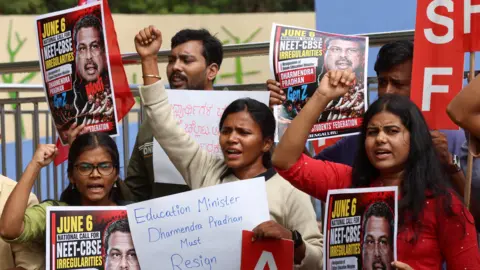
Nikhil Pahwa, a tech analyst on X, asked whether authorities would turn to other services like WhatsApp or Discord if the same illicit activity appears there. Opposition leader Mallikarjun Kharge demanded the resignation of Education Minister Dharmendra Pradhan for the disruption caused to millions of students.
Many students expressed frustration over blocked access to free study materials. While some voted for the ban, they insisted the focus should be on those leaking exam papers.
Telegram has emphasized that it has taken down hundreds of channels sharing leaked materials and has increased the "edited" label to expose backdating scams.
The incident marks India’s first instance of blocking a major social platform under the IT Act, igniting debate over the balance between state security and digital freedom.