In brief
In a dramatic turn, teenage women chanting at the Cockroach Janta Party in Delhi used profanity that spurred leaders to denounce the protest. Prime Minister Narendra Modi dismissed the cussing as a 'culture shock' and later issued an apology, revealing the government's uneasy stance towards the language. Opposition leader Rahul Gandhi countered Modi by arguing that both male and female protesters shouted, pointing to patriarchal double‑standard. The incident has opened a wider debate about gender, profanity and civility in Indian politics, underscoring a public demand for a new standard of discourse.
The debate over women’s swearing ignites a clash in Indian politics
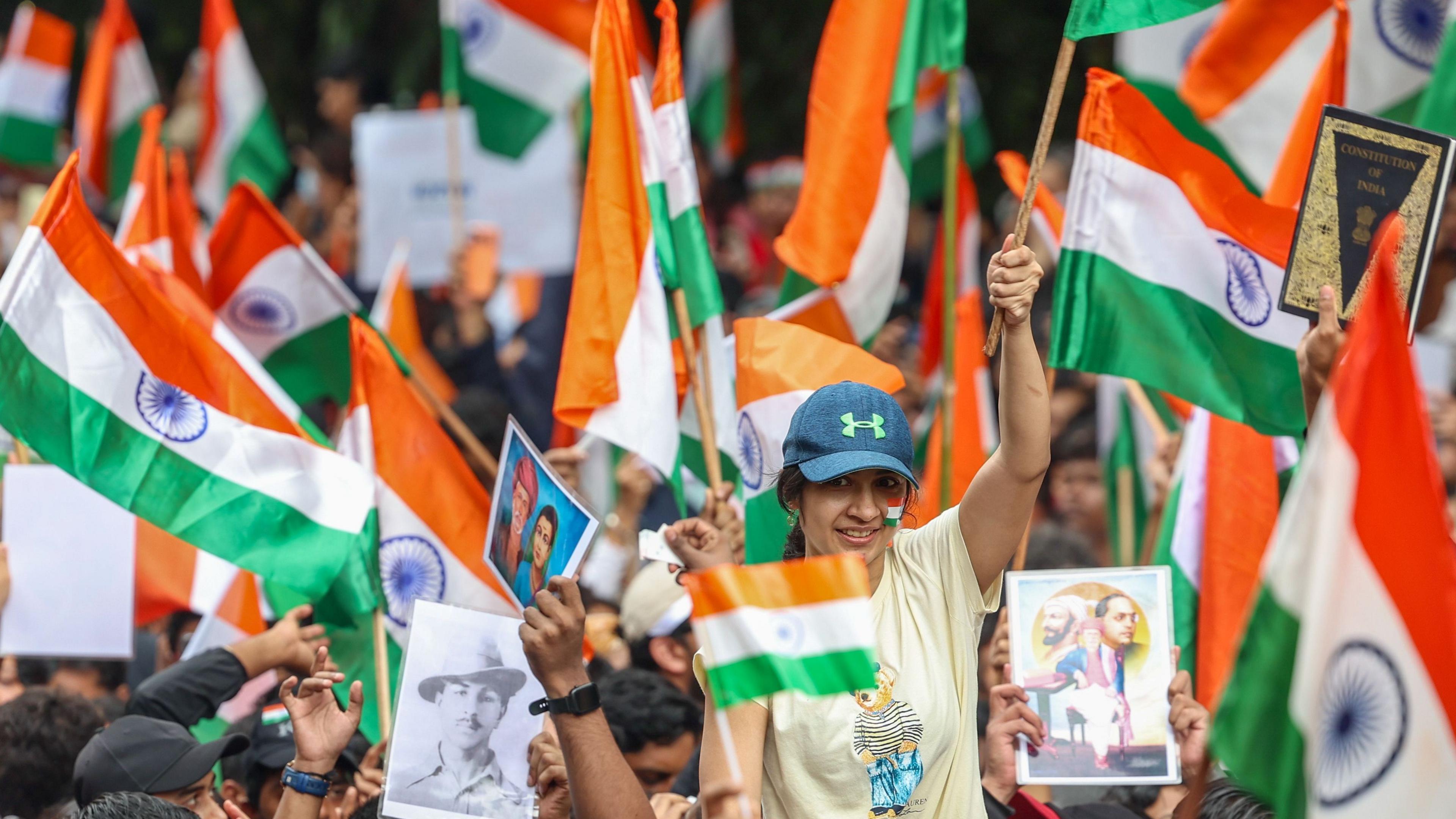
In a dramatic turn, teenage women chanting at the Cockroach Janta Party in Delhi used profanity that spurred leaders to denounce the protest. The angry language targeted the prime minister, causing a wave of outrage among his supporters and raising the question of whether gender matters when it comes to cursing.
Prime Minister Narendra Modi captured the moment in a selfie‑video, calling it a “culture shock” and later issuing an apology – remarks that were criticized as “patriarchal.” He added that “some naughty children used extremely abusive expletives which have no place in a civilised society,” but also warned that “mistakes are made in childhood and it’s an opportunity to fix them.”
Opposition leader Rahul Gandhi countered Modi’s single‑gender focus, saying that “if boys swear, there is no problem, but if a girl swears, it becomes a cultural shock.” He highlighted that both male and female protesters had used foul language during the exam‑paper protests. Gandhi told students in Pune that Modi’s remarks “showed a patriarchy that lets men fly while women are held back.”
The controversy has highlighted a wider dialogue about profanity in India. Social activist Sunil Jalan says the focus should be on swearing itself, not the gender of the speaker, citing a survey where 55% of participants admitted to using foul language. The conversation has spread beyond protest sites, finding its way into television debates, courtrooms, and even parliament.
The incident sparks an ongoing debate about gender, civility and the role of expletives in public discourse. Different voices – from journalists to politicians – argue whether patriarchy is embedded in the reactions to women’s cursing or if it is merely a reflection of societal profanity overall.