In brief
Israel’s next election will see a surge of first‑time voters who could tip the balance. Far‑right National Security Minister Itamar Ben Gvir, once rejected by the army for his extreme views, now leads a political wave that has captured much of the 18‑ to 22‑year‑old demographic. Polls show over 16% of new voters plan to back his party or its ally, while social‑media savvy candidates are racing to out‑talk them. Despite deep divisions across the country, the prospects of a tight race hinge on whether fresh voices support the security‑heavy agenda of Ben Gvir or the more moderate opposition.
Israel’s far‑right minister Itamar Ben Gvir is building a growing support base among first‑time voters, a development that could redefine the outcome of the upcoming national elections.
Ben Gvir’s political journey began in his youth when he was refused entry to the Israeli army over concerns that his views were “too extreme.” Thirty‑five years on, his rhetoric remains largely unchanged – supporting annexation of the West Bank, Jewish settlement in Gaza, and the forced “voluntary emigration” of Palestinians – yet he now sits at the heart of Prime Minister Benjamin Netanyahu’s coalition government.
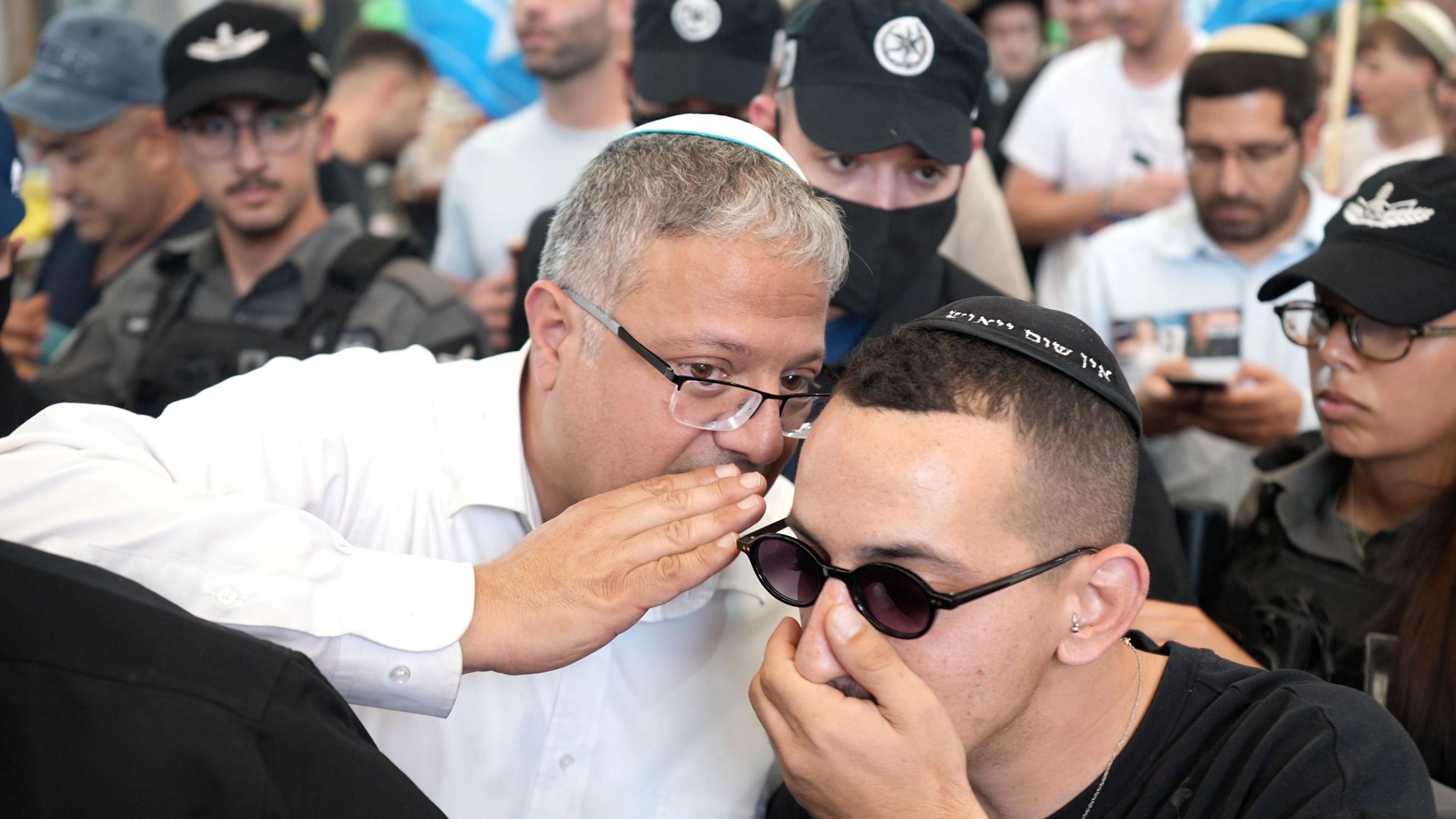
On the campaign trail, Ben Gvir is frequently surrounded by a vibrant, jubilant crowd of young supporters, waving party flags and carrying out a show of strength. In the mixed market of Ramle he encouraged first‑time voters, many of whom had never participated in elections, to “get out and vote.” One 20‑year‑old fan, Mordechai, said Ben Gvir’s “slips of the tongue” do not matter; another, Nadav, believed the minister would “give us safety” and protect recruits in the army.
Polling data underscore the pivotal role of the youth vote. Over 800,000 newcomers to the electorate are expected to take part, and 16% have already pledged to support Ben Gvir’s Jewish Power or the allied Religious Zionism party. The appetite for hard‑line policies seems especially strong among 18‑ to 22‑year‑olds, a demographic that recent surveys report is 60% more right‑wing than the 55‑plus cohort.
Many of the young voters’ leanings are rooted in the trauma of the 7 October Hamas attacks, which triggered the ongoing Gaza war. Those who grew up in a region of constant threat report feeling a heightened sense of insecurity, a sentiment that Ben Gvir’s security‑heavy platform promises to address. Political analyst Dahlia Scheindlin notes that “they have been socialised into the extreme terms of the debate as legitimate to discuss: annexation, settlement expansion, and – after 7 October – annexation of Gaza.”
Nevertheless, the far‑right’s appeal is not unanimous. Some shopkeepers in Ramle and local residents have expressed discomfort, dividing the city’s mixed Jewish and Arab population. Critics argue that the youth’s enthusiasm for a hard‑line agenda may amplify existing tensions and alienate Israel’s Arab citizens.
In a country where politics is increasingly decided on social media, Ben Gvir’s early adoption of TikTok and Instagram has made him a familiar face in the digital sphere, outpacing even former Prime Minister Naftali Bennett. While Bennett’s party has gained ground in recent months, Ben Gvir remains a dominant presence online.
Opposition parties are deploying a counter‑strategy, warning younger voters about threats to democracy and flooding the shared‑media landscape with critical content. Yet, in a historically tight race, the real winner could be determined by which side can mobilise the momentum of the first‑time voters.