In brief
A new documentary suggests that the somber mood in America following President Kennedy’s assassination may have paved the way for The Beatles’ monumental rise in the U.S. music scene.
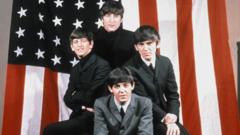
In a captivating exploration, the new documentary "Beatles '64" delves into how The Beatles' first U.S. tour coincided with the nation grappling with tragedy following President John F. Kennedy’s assassination. Paul McCartney posits that the somber atmosphere in America may have created a void that The Beatles were uniquely positioned to fill. "When we came, it was quite shortly after Kennedy had been assassinated... Maybe America needed something like The Beatles to be lifted out of sorrow," he reflects in the film.Cultural historians and Beatles scholars have long noted how significantly the band resonated with a grieving nation. Analyzing this effect, Dr. Patrick Andelic, a history professor, underscores JFK’s connection with the youth—a trait The Beatles also embodied. “Kennedy was the first TV president...young, handsome, witty, and energetic, which matched well with The Beatles,” he shares. The contrast between the memorial for a youthful president and the arrival of youthful musicians had a notable emotional impact on the American psyche during that period.When The Beatles touched down at the newly renamed John F. Kennedy International Airport on February 7, 1964, it was just ten weeks after JFK's assassination—a traumatic event that left the country in mourning. Dr. Andelic notes that the combination of the young musicians with the recent national trauma could create a yearning among the public for joy and energy, as The Beatles embodied those qualities as they landed with their signature silliness and youthful exuberance.Prior to their U.S. debut, The Beatles had already captured hearts in the UK, releasing two number one albums and dazzling audiences with their groundbreaking Royal Variety Performance. This established them as an unstoppable force by 1964. In America, however, breaking through proved challenging, as many British acts had previously struggled to gain traction across the Atlantic.As the Ed Sullivan Show loomed on the horizon, Capitol Records was initially hesitant due to a history of unsuccessful attempts by British artists to break into the American market. However, the release of "I Want To Hold Your Hand" in late December 1963, shortly after Kennedy's murder, changed the game and saw the band skyrocketing to the top of the charts in early February 1964.The critical moment arrived during The Beatles' performances on The Ed Sullivan Show, which attracted more than 70 million viewers and shifted the cultural landscape. The televised event allowed Americans to see the personalities behind the music, increasing their connection with the band. "The camera work really brought them into American homes," Spencer Leigh notes about those memorable moments on stage.While some argue that JFK's assassination provided a backdrop for The Beatles' entrance into the American market, others maintain that their eventual success stems more directly from their own talent and charisma, amplified by savvy marketing and management strategies that were already in place before the tragedy.Dr. Holly Tessler of the University of Liverpool argues that attributing their success solely to the assassination simplifies a multifaceted narrative. The groundwork for their triumph in the U.S. had already been laid, suggesting that the connection to JFK, while poignant, is only a part of a much larger story."Beatles '64" is now available for viewing on Disney+, inviting audiences to revisit this pivotal moment in music history and highlight the intricate interplay between cultural context and artistic phenomena.