In brief
China’s industrial amp up—over 2 million robots now run factories—goes hand in hand with a new generation of students training to program and maintain them. In Hangzhou's Technician Institute, 15‑year‑olds learn coding and robotics to fill sweeping new tech roles. Government plans to replace an aging workforce with automation, but it risks rapid job losses unless paced carefully. The US remains a leader in AI ‘brains’, yet China’s component ecosystem gives it a distinct advantage. This quiet revolution could either drive prosperity or deepen unemployment as robots take over more jobs.
I take a nap and the world changes,” says Chen Tianyu, a 28‑year‑old computer‑science teacher who spends his spare time shadowing factories that are turning to automation. By watching industrial robots assemble parts, he keeps his classroom lessons fresh and relevant.
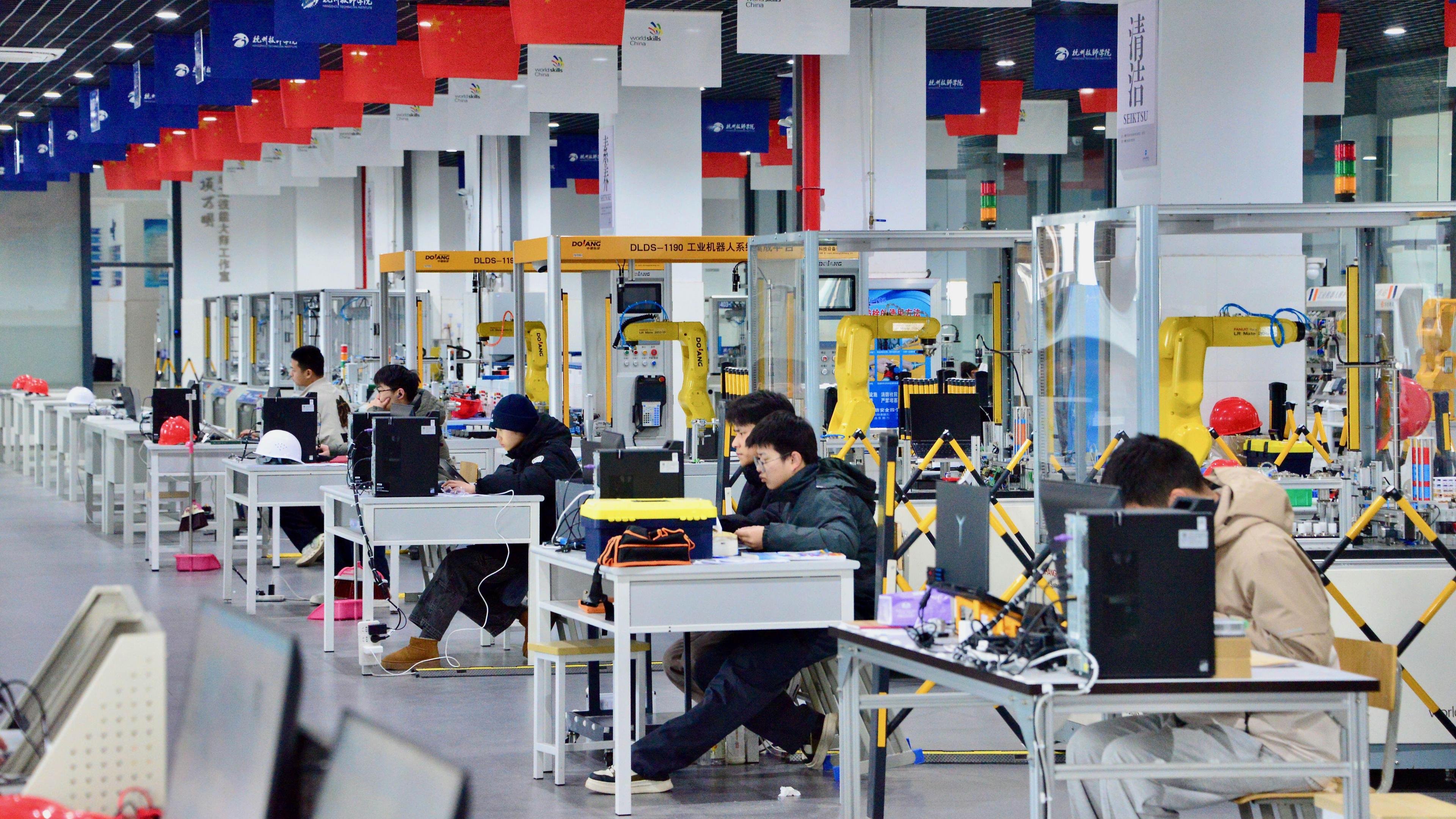
Around thirty of his students juggle code on laptops while an array of industrial arms waits to be programmed. One student emails the courier cylinder onto a conveyor, and another drafts a routine to move it from one spot to another. “If you’re not needed by the world of AI and robotics, you’ll be among those eliminated,” Chen warns.
Students at the Hangzhou Technician Institute, a purpose‑built vocational school, commence training from age 15. The campus houses entire floors dedicated to engines and aeronautics and a restricted area for students tackling rare‑earth processing—one of China’s key industries.
China now operates more than two million industrial robots, the largest fleet worldwide, and it is scaling up at an extraordinary pace. The government sees automation as a solution to a looming demographic crisis: over a third of its population will be over 60 by 2035, and it will lose nearly 60 million workers in the next decade.
But uncoordinated rapid deployment risks massive job losses. Vice‑president Cao Li of EV maker Leapmotor explains that while robots can run 24/7, they still need maintenance, inspections and repairs—a human element that would still be required at the assembly line’s end.
China’s advantage lies in its manufacturing ecosystem: component parts are sourced in under an hour, whereas in Europe it could take a week. Yet the US maintains a lead in AI ‘brains’. Chinese startups like DeepSeek and Moonshot are catching up with open‑source AI models, and the race may now hinge on seeding intelligence into millions of machines worldwide.
For many, technology presents paradoxes: a rise in productivity could boost prosperity, but could also erode livelihoods. Chen’s students ask whether the future will bring jobs or automation. He replies, “I don’t know, but we must keep moving forward to discover what we’re capable of.”
As China paves its factories and classrooms toward a robot‑centric tomorrow, this quiet revolution could either lift the country to new heights or deepen existing labour challenges. The world watches closely as the next phase of the competition unfolds.