In brief
The first-ever Modest Fashion Week in Paris dazzled spectators with nearly 30 designers showcasing a blend of floral dresses and modern streetwear. Highlighting the evolving role of modest fashion in contemporary culture, designers emphasized inclusivity and empowerment against the backdrop of France's complex relationship with religious attire.
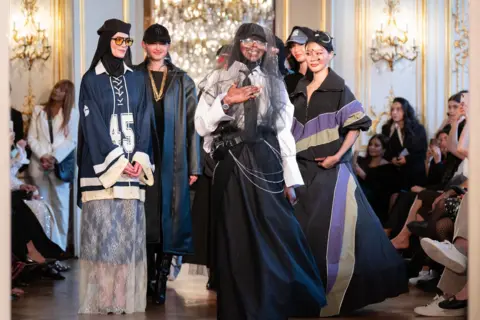
Paris has held its first ever Modest Fashion Week, featuring nearly 30 designers showcasing collections that include loose, long-cut garments and headscarves. This event signifies a critical moment, emphasizing that Muslim women can embrace their style while also adhering to their religious principles effectively.
The significance of this event is profound, especially in a country where wearing hijabs and other religious attire often leads to controversy and restrictions. Rukaiya Kamba, the creative director of Nigerian brand Flaunt Archive, spoke of the intentional significance behind presenting a collection in Paris. As models graced the runway, attendees expressed that the event felt reflective of a more inclusive and accepting French culture.
France is home to an estimated 5-7.5 million Muslims, and Özlem Şahin, the head of Modest Fashion Week, has proclaimed Paris a leading city in the modest fashion sphere. The event, set in the elegant Hôtel Le Marois just off the bustling Champs-Élysées, highlighted floral aesthetics and nature-inspired hues, offering a fresh blend of elegance and modernity.
Hicran Önal, a Turkish designer, showcased dresses that creatively combined soft tones with vibrant florals, while Aisa Hassan from Australia introduced warmer hues inspired by nature. The event also featured French brands like Soutoura and Nour Turbans, which have adopted streetwear influences, further bridging the gap between fashion and cultural identity.
As the modest fashion market is expected to grow significantly, this event stands out as a testament to the evolution of personal expression against a backdrop of societal norms and restrictions. Highlighting the plight faced by Muslim women in France, Fatou Doucouré, founder of Soutoura, expressed pride in presenting her collection in Paris, a city where she once felt her hijab was a barrier. The event illustrates a collective movement towards acceptance and empowerment of diverse identities within the fashion industry.
The various designers demonstrated that modest fashion is not solely for Muslim women; it appeals to various demographics, redefining boundaries and style norms.