More than 400 Detained as French Student Protests Escalate

More than 400 people, mostly minors, were detained in France on Tuesday over student protests at high schools nationwide, the interior minister said.
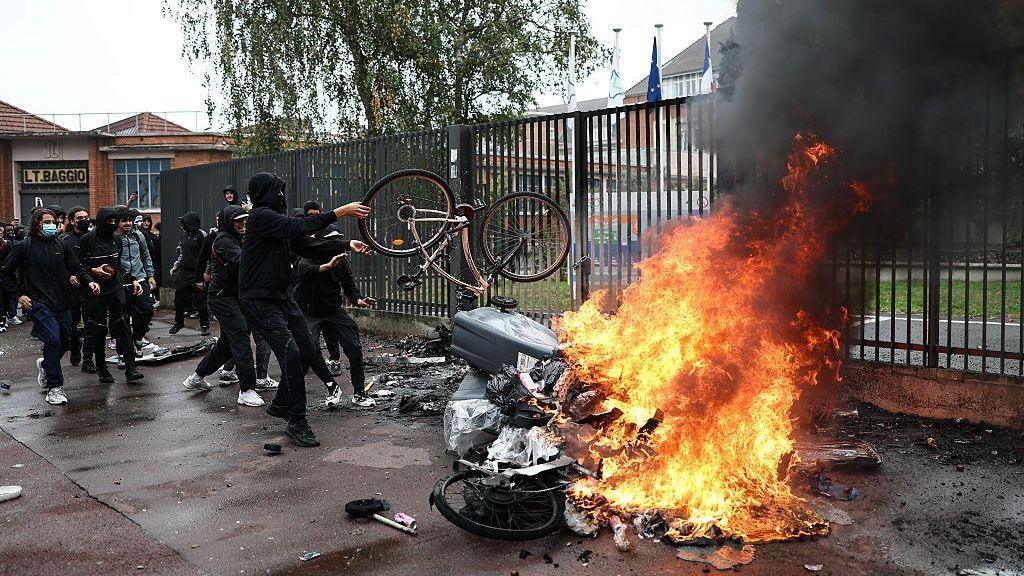
The demonstrations began in Paris and, over the following days, teenagers blocked their schools in protest against overcrowded classrooms, teacher shortages and what they say is a broken education system. Reports indicate over 10 teachers and several students, along with 48 police officers, were injured, and at least 400 schools experienced disruptions.
Video footage shows bins set aflame and bus stops vandalised, while some locals describe the scene as a violent confrontation between students and police. Protesters hurled projectiles at police who responded with batons and tear gas. The police claim a proportionate response; Interior Minister Laurent Nuñez stated the force used was "extremely proportionate".
Education Minister Édouard Geffray, meanwhile, defended the right to protest but called the violence “indefensible” and warned that ongoing blockades would endanger students and public workers alike.
"We’re here to deliver a message," one 16‑year‑old female student told AFP. "We’re not here to smash everything up for no reason. We’re here precisely to say that the education system is completely broken. There are 34 of us in each class, and it’s just not feasible. The teachers are overworked."
Union spokesperson Ryad Rani accused the government of “repression” and accused the police of using excessive force. Minister Nuñez repeated that the protests, while involving at least 200,000 participants, largely stayed calm aside from isolated violent incidents.
Prime Minister Sébastien Lecornu warned that any escalation would be “irresponsible” after the arrest of 164 people, echoing concerns over fireworks, fires and violence near high schools. He added that while teachers, hospital staff and civil servants joined nationwide walk‑outs, these were mostly peaceful.
The protests mark a critical moment for France’s education sector, highlighting systemic issues that could reshape future policy and public trust in the state’s ability to protect its younger citizens while managing dissent.