In brief
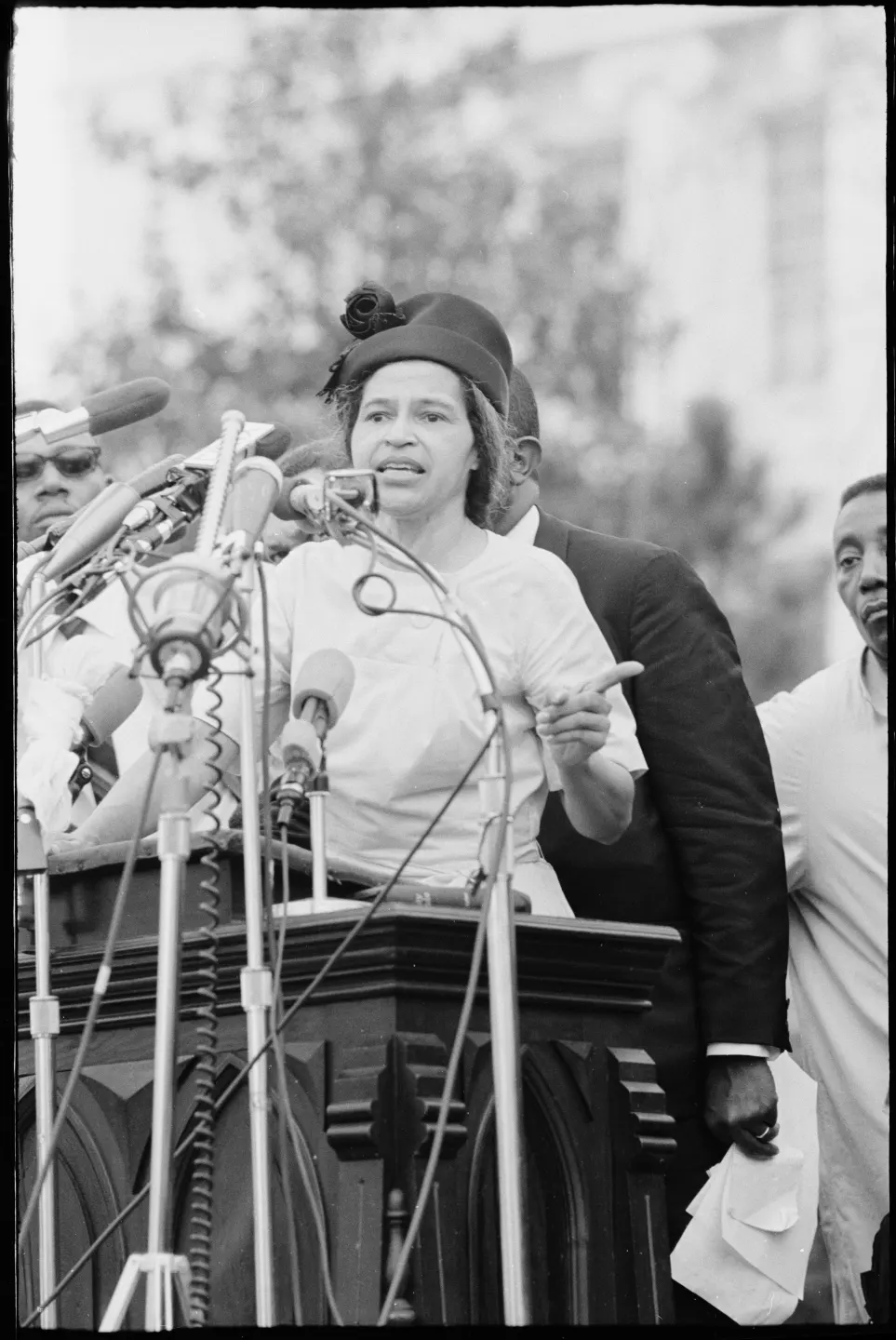
In celebration of the 70th anniversary of the Montgomery Bus Boycott, unseen photographs of Rosa Parks, taken by Civil Rights photographer Matt Herron during the historic Selma to Montgomery march, have been unveiled. These images, which capture Parks beyond her famed act of defiance in 1955, enrich the narrative of her lifelong commitment to civil rights. The release coincided with a gathering of individuals connected to the Boycott, further honoring the contributions of countless activists during the era. The director of the Rosa Parks Museum emphasized the importance of these photos in showcasing Parks as both a person and an activist, while family members of other march participants shared heartfelt reunions and memories tied to the images.
MONTGOMERY, Ala. — Seven decades after Rosa Parks was indelibly etched into American history for her courageous defiance on a Montgomery bus, the release of never-before-seen photographs unveils lesser-known facets of her notable legacy.
These poignant images, captured by Matt Herron - a prominent Civil Rights photographer - during the 1965 Selma to Montgomery march, showcase Parks in a multitude of moments, reflecting her dedication to activism that transcended her iconic act of civil disobedience in 1955. This five-day march played a critical role in propelling the U.S. Voting Rights Act of 1965, marking a pivotal moment in the Civil Rights Movement.
On Friday, in commemoration of the 70th anniversary of the Montgomery Bus Boycott, former participants and descendants of boycott organizers convened to honor their shared history. This boycott, spanning 381 days, notably dismantled racial segregation on public transit in Alabama's capital.
Donna Beisel, director of the Rosa Parks Museum, remarked on the significance of the newly released photos, stating, “This is showing who Ms. Parks was, both as a person and as an activist.” These images, unveiled at the museum last Thursday, serve as a poignant reminder of Parks’ extensive involvement in the fight for civil rights.
Rediscovery of History
Many images from the Selma to Montgomery march had been previously displayed, while some remained archived, never receiving the recognition they deserved. Herron's dedication to capturing everyday people amidst the movement provides a lens into the collective endeavor that propelled civil rights leaders toward effecting change.
Jeannine Herron, the photographer's widow, expressed her enthusiasm for reintroducing these invaluable pieces of history to the local communities they represent. "It’s so important to get that information from history into local people’s understanding of what their families did," she noted.
Reunions and Remembrance
A touching reunion took place as Doris Wilson, a key participant in the march, returned to see herself reflected in the lens of history six decades later. She remembered the pain of blisters endured during the march, only to reunite with doctor June Finer, who had treated her years prior.
Wilson's son, Robert, expressed his astonishment upon seeing the photos of his mother in action. Meanwhile, Cheryl Gardner Davis reflected on her family's contributions to the march, illustrating how the newly surfaced photographs validated her family's sacrifices during this transformative era, fulfilling a long-held aspiration to understand their significance.
The unveiling of these photographs serves to honor not only Rosa Parks but all the unsung heroes of the Civil Rights Movement, ensuring their stories and struggles are recognized in the narrative of American history.