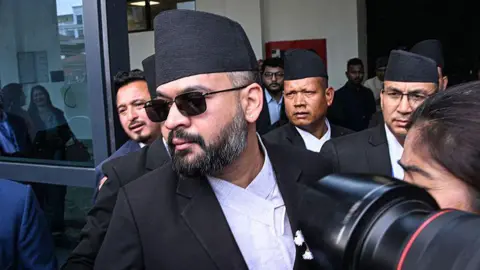
Nepal's New Prime Minister: The Rise of a Rapper Turned Politician
Balendra Shah, known as Balen, has made history as Nepal's newly sworn-in prime minister after a significant electoral victory, capitalizing on a wave of youth activism and a demand for change. Just 35 years old, Shah's ascent marks a notable shift in the nation's political landscape, reflecting a growing dissatisfaction with corruption and elite rule in the country.
His journey to power began amidst the passionate youth-led protests that swept across Nepal last year, reflecting a desire for transformation in governance. Shah's previous experience as mayor of Kathmandu helped build his profile, where he implemented a range of reforms aimed at addressing urban issues. His previous track record and his ability to connect with the younger demographic made him a natural candidate for the prime ministerial role.
In a show of optimism, Shah released a campaign song that quickly garnered over two million views, resonating with an electorate eager for change. His victory is seen as a powerful statement against the old political establishment, and while his supporters express hope for meaningful reforms, some skeptics question whether the relatively new Rastriya Swatantra Party (RSP) can deliver on its promises.
Shah's rise reflects changing dynamics in Nepal, and while he has enjoyed widespread support, potential challenges loom on the horizon, including previous criticisms regarding the enforcement of policies as mayor that impacted marginalized communities. His leadership style, often avoiding traditional media engagement in favor of social media outreach, positions him uniquely in the political arena.
As he assumes office, the young leader must navigate a myriad of issues the country faces, including economic struggles and the lingering impacts of last year's protests. Amidst hopes for change, Balendra Shah embodies the aspirations of many Nepalis looking for a fresh start.