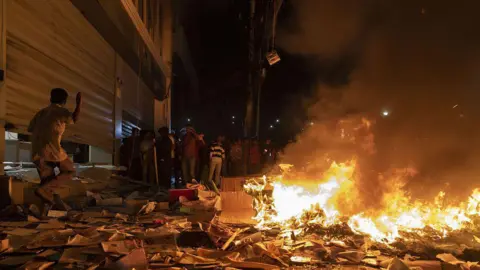
January 6, 2021, marked a dark day in American history as the U.S. Capitol was besieged by rioters protesting the certification of President Joe Biden's electoral victory. This article explores an excerpt from Mary Clare Jalonick's book, 'Storm at the Capitol: An Oral History of January 6th,' which compiles personal testimonies, official accounts, and court documents to portray the events that transpired that fateful day.
In the afternoon hours, as chaos unfolded outside the Capitol, rioters breached several entrances, leading lawmakers to flee for their safety. The excerpt recounts the harrowing moments leading up to and during the violence at the Lower West Terrace Tunnel, where police faced an overwhelming and aggressive crowd.
Capitol Police officer Brian Sicknick was among those injured while bravely standing against the onslaught. Texts exchanged between him and his brother revealed their concerns and the severity of the situation. Despite initial predictions of violence, the day escalated into a fierce battle for control over the Capitol.
Officers described hand-to-hand combat, physical exhaustion, and fear as they fought to hold the line against a relentless mob. Sergeant Aquilino Gonell recounted the viciousness of the rioters, while Officer Michael Fanone described brutal attacks against law enforcement personnel, including attempts to seize firearms.
As the fight continued in the narrow tunnel, the struggle became a desperate fight for survival. Officers used their bodies as shields while the rioters pushed with all their might, leading to a scenario likened to a medieval battlefield.
The emotional toll on the officers involved was immense. Many reflected on their families and the possibility of never seeing them again. After hours of hostility, Brian Sicknick, who later fell unconscious after sustaining injuries, tragically passed away shortly after the events.
In the wake of January 6th, significant discourse emerged about the events, the perspectives of both rioters and police, and the implications for American democracy. Jalonick's work aims to preserve the narrative of that day through the eyes of those who lived through it, serving as a powerful reminder of the fragility of power and order in society.
For more on this topic, check out Mary Clare Jalonick's 'Storm at the Capitol,' where these stories and more are explored in detail.